Dental care in Korea, made clear
Straightforward articles on costs, insurance, and what to expect — written for international residents in plain English.
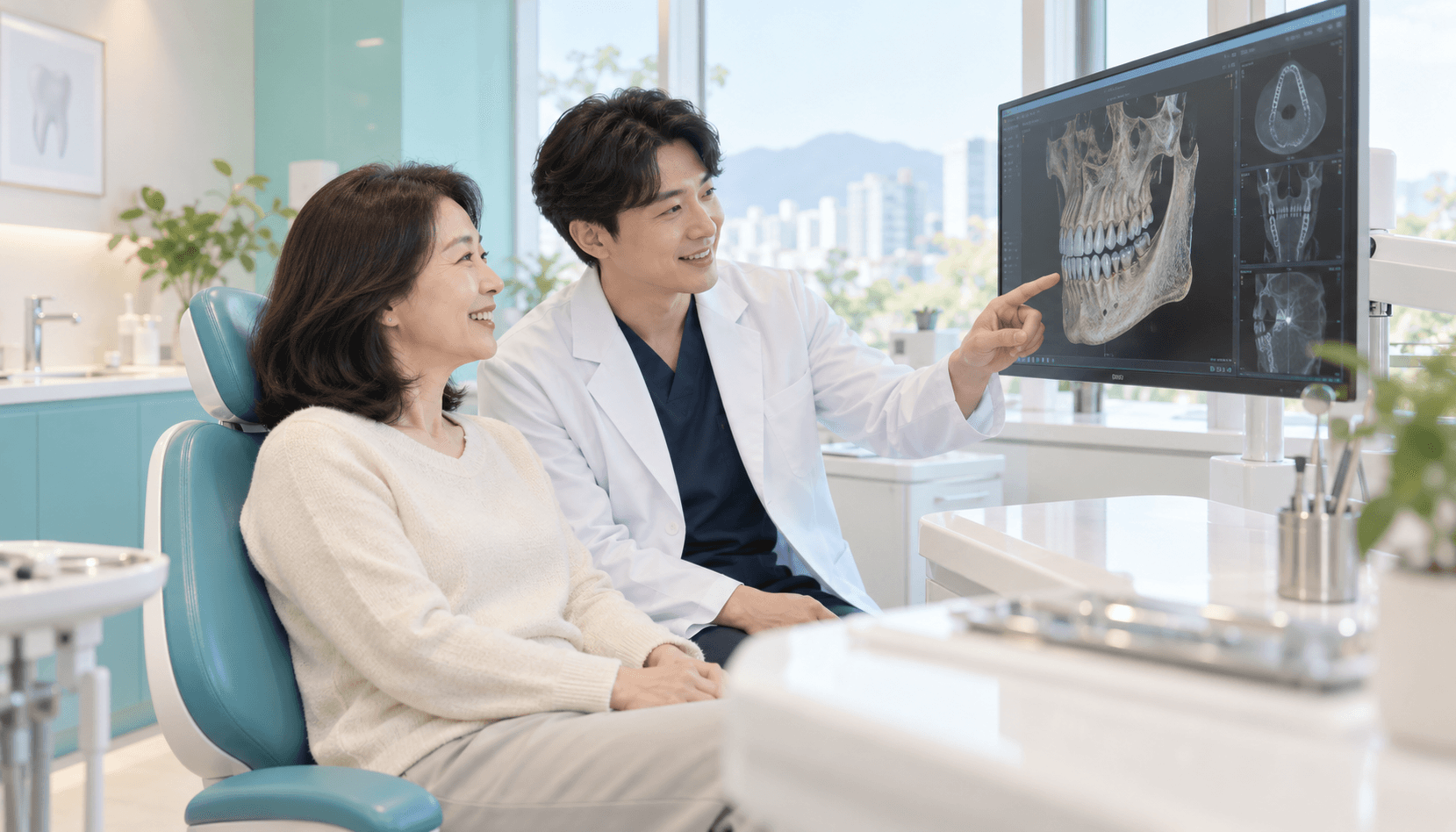
Bone Graft & Sinus Lift for Dental Implants in Korea
Told you need a bone graft or a sinus lift before your implant? What they are, when they're genuinely needed, how much time they add, and why they make quotes differ — in English for foreign residents in Korea.
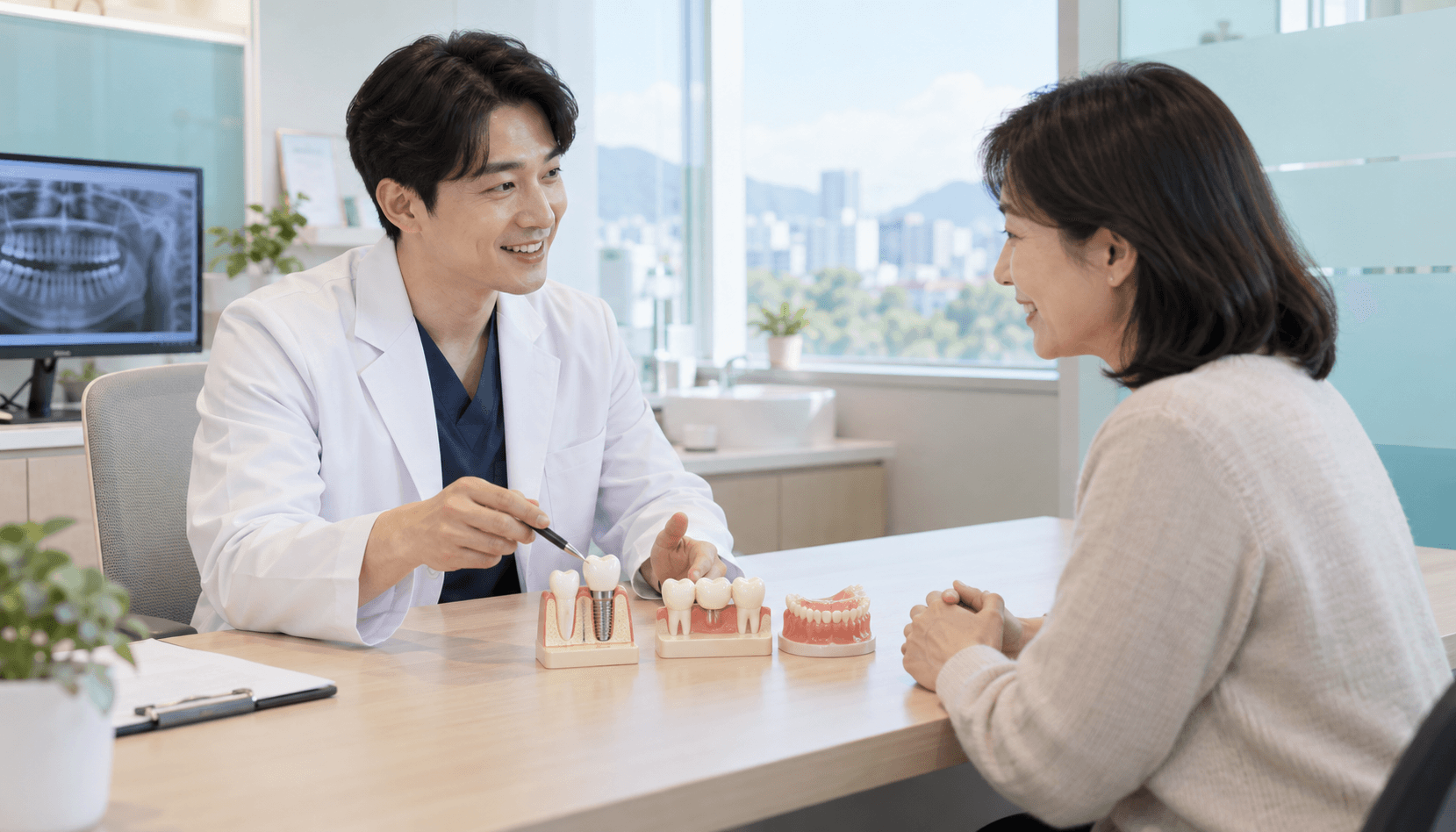
Implant vs Bridge vs Denture in Korea: How to Choose
Missing a tooth in Korea? A straight comparison of implants, bridges and dentures — what each does to your other teeth, how long they take, what they cost relative to each other, and how to decide. In English.
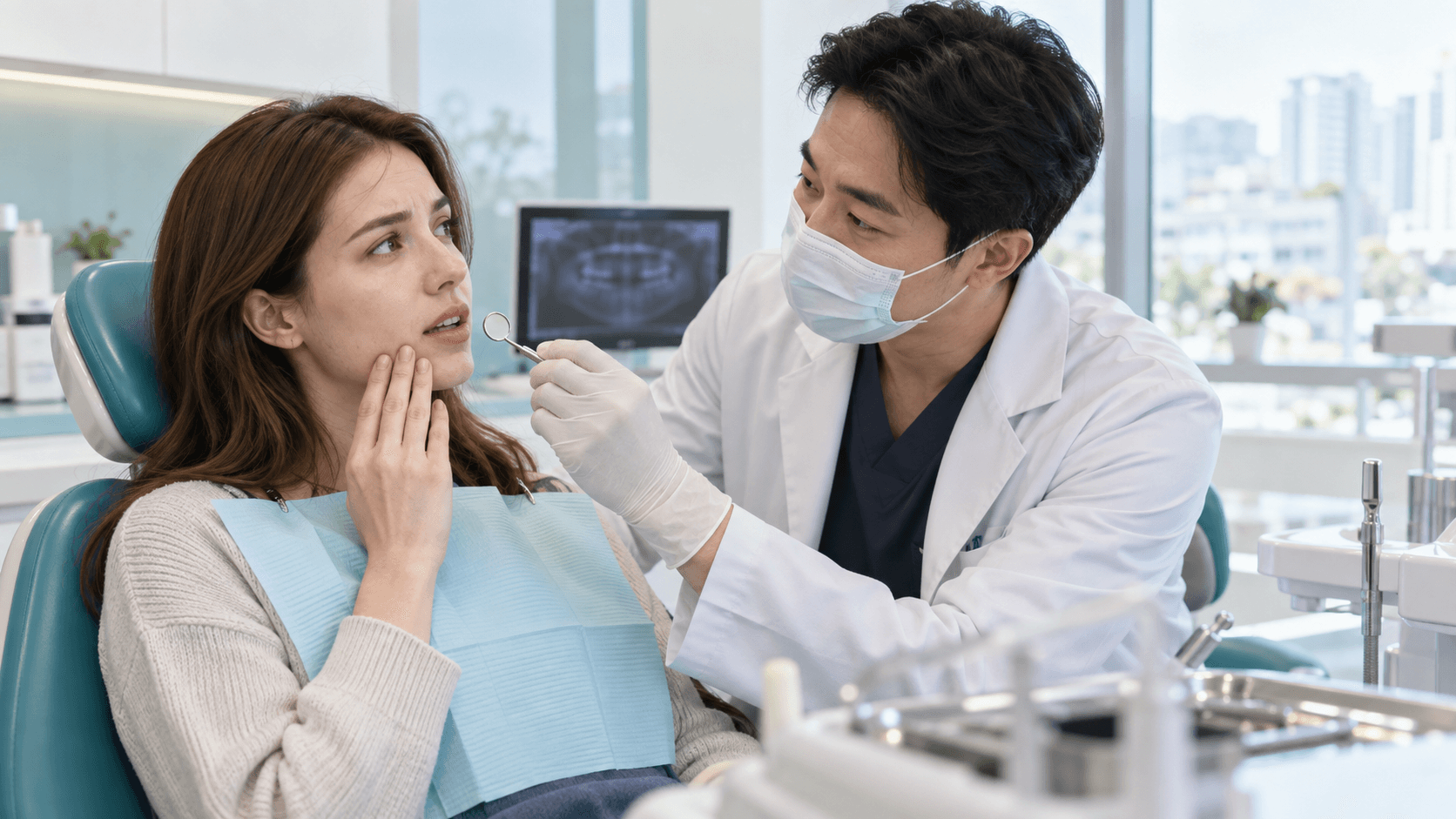
TMJ and Jaw Pain in Korea for Foreigners: Causes & Treatment
Jaw pain, clicking, or a jaw that catches — what TMJ disorder is, how it's treated in Korea, and when to get it checked, for foreign residents in English.
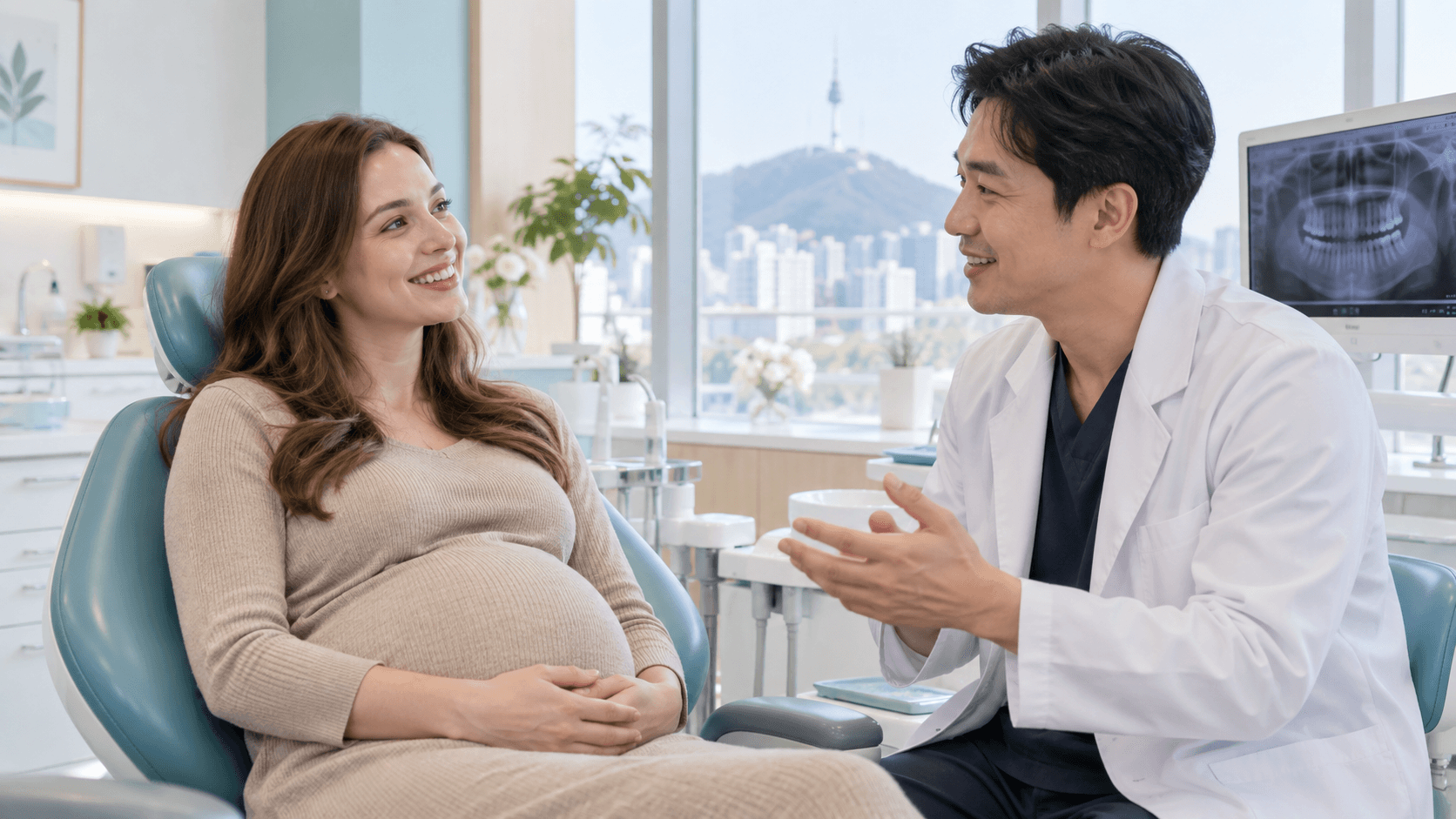
Dental Care During Pregnancy in Korea for Foreigners
What's safe, the best timing, x-rays and anaesthetic, and bleeding gums — dental care during pregnancy in Korea, explained in English for expecting foreign residents.
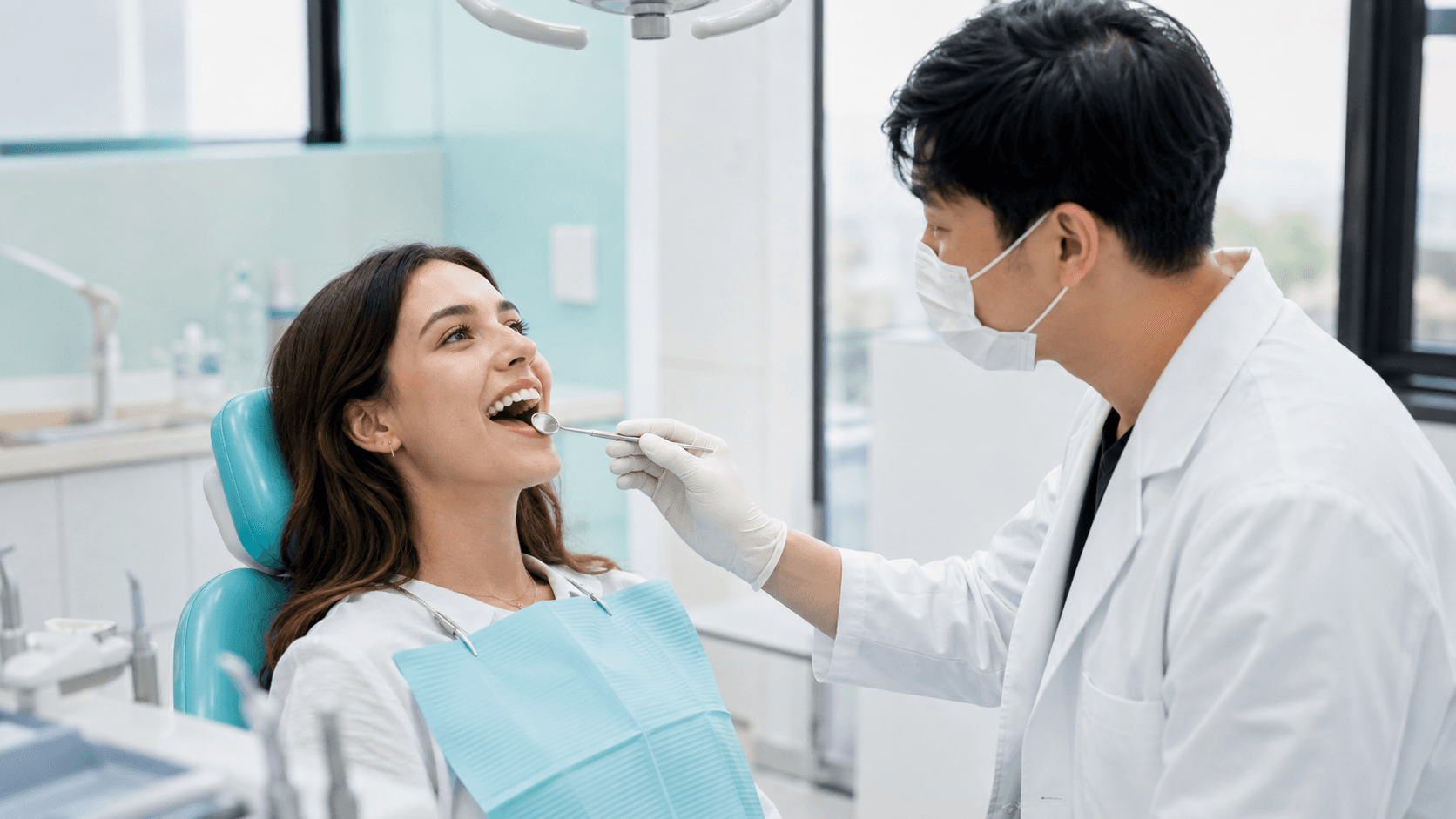
Dental Checkups and Korea's National Screening for Foreigners
The free national oral screening, yearly covered scaling, and regular checkups — the preventive dental care you're entitled to as an NHIS-enrolled foreigner in Korea.

Broken or Knocked-Out Tooth in Korea: What to Do
First aid for a broken, chipped, or knocked-out tooth — what to do in the first hour and how to get seen fast in Korea, in English.
Dentures in Korea for Foreigners: Types, Cost & Implant Options
Full, partial, and implant-supported dentures — how they work, how they compare with implants, and what NHIS covers, for foreign residents in Korea.
Sensitive Teeth in Korea for Foreigners: Causes & Treatment
Why teeth get sensitive, when it's a sign of something to treat, and what a dentist in Korea can do about it — for foreign residents, in English.
Dental Insurance for Foreigners in Korea: NHIS, Private Plans & Claims
How to be covered at the dentist as a foreigner in Korea — NHIS, private and expat plans, and how to claim — explained in English.

Tooth Extraction in Korea for Foreigners: Process, Cost & Aftercare
When a tooth can't be saved: what extraction is like in Korea, the aftercare, what NHIS covers, and how to replace the tooth — for foreign residents.

Teeth Whitening in Korea: Options, Cost, and What Actually Works
In-office vs take-home whitening in Korea, how it actually works, what results are realistic, sensitivity, how long it lasts — and when whitening isn't the right tool.
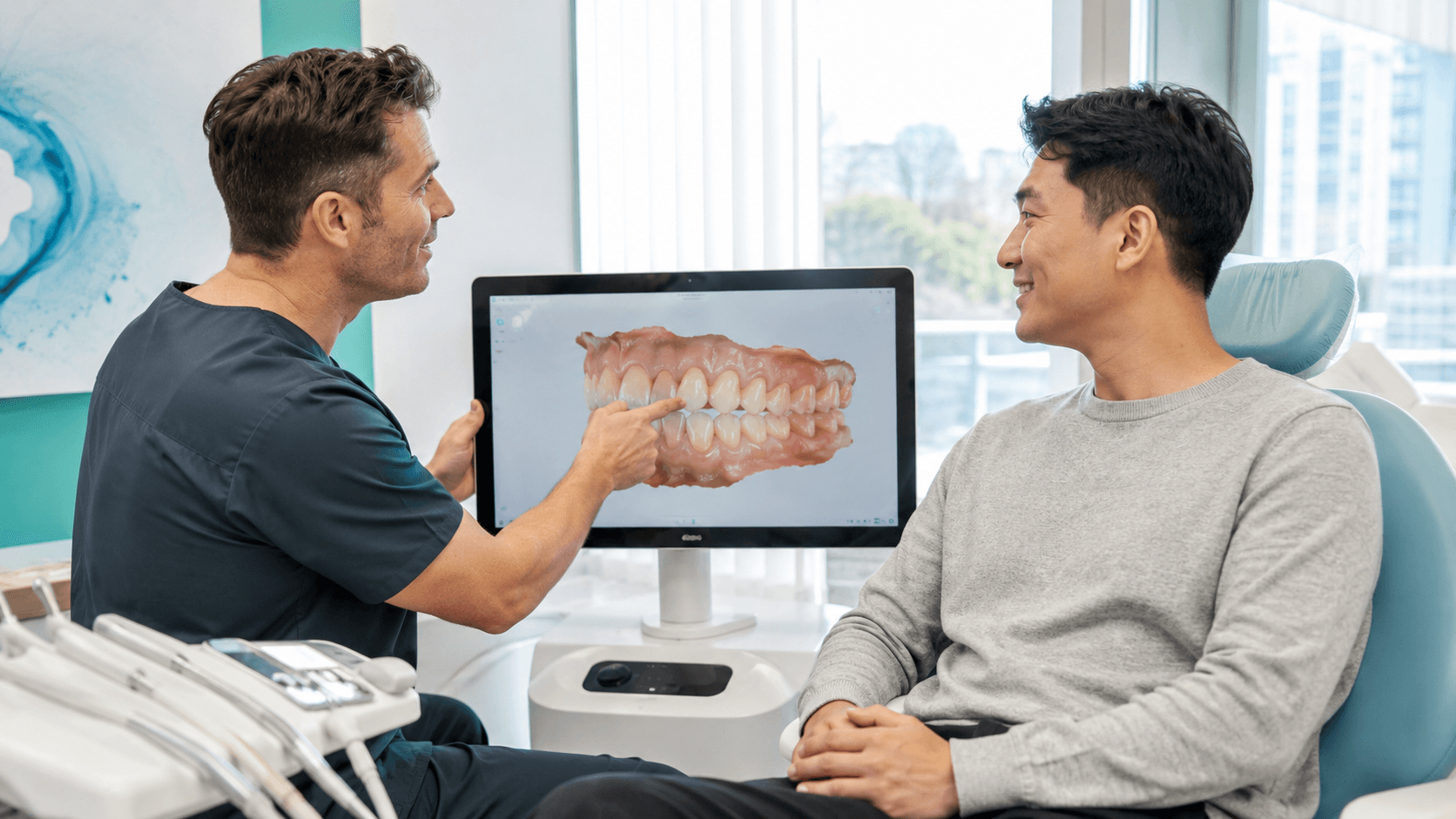
How to Find an English-Speaking Dentist in Seoul (and Nearby)
Where to look, what to check before you book, and the questions that separate real English-language care from a front desk that says "yes" — for foreigners in the Seoul area.
Cavities and Fillings in Korea for Foreigners: What to Expect
Cavities, explained: how fillings work in Korea, the types (and what NHIS covers), and when decay needs more than a filling — for foreign residents.
How Much Do Dental Implants Cost in Korea? A Foreigner's Guide
What really drives implant pricing in Korea — the parts, the brands, NHIS coverage, and how to read an estimate — for foreign residents.
Gum Disease in Korea: Bleeding Gums, Treatment, and What NHIS Covers
Bleeding or swollen gums are the first sign of gum disease — and it's very treatable when caught early. Here's what to know, in English.

Teeth Grinding and Night Guards in Korea (Bruxism)
Grinding or clenching your teeth — often at night — can wear them down and cause jaw pain. Here's how it's managed in Korea, in English.
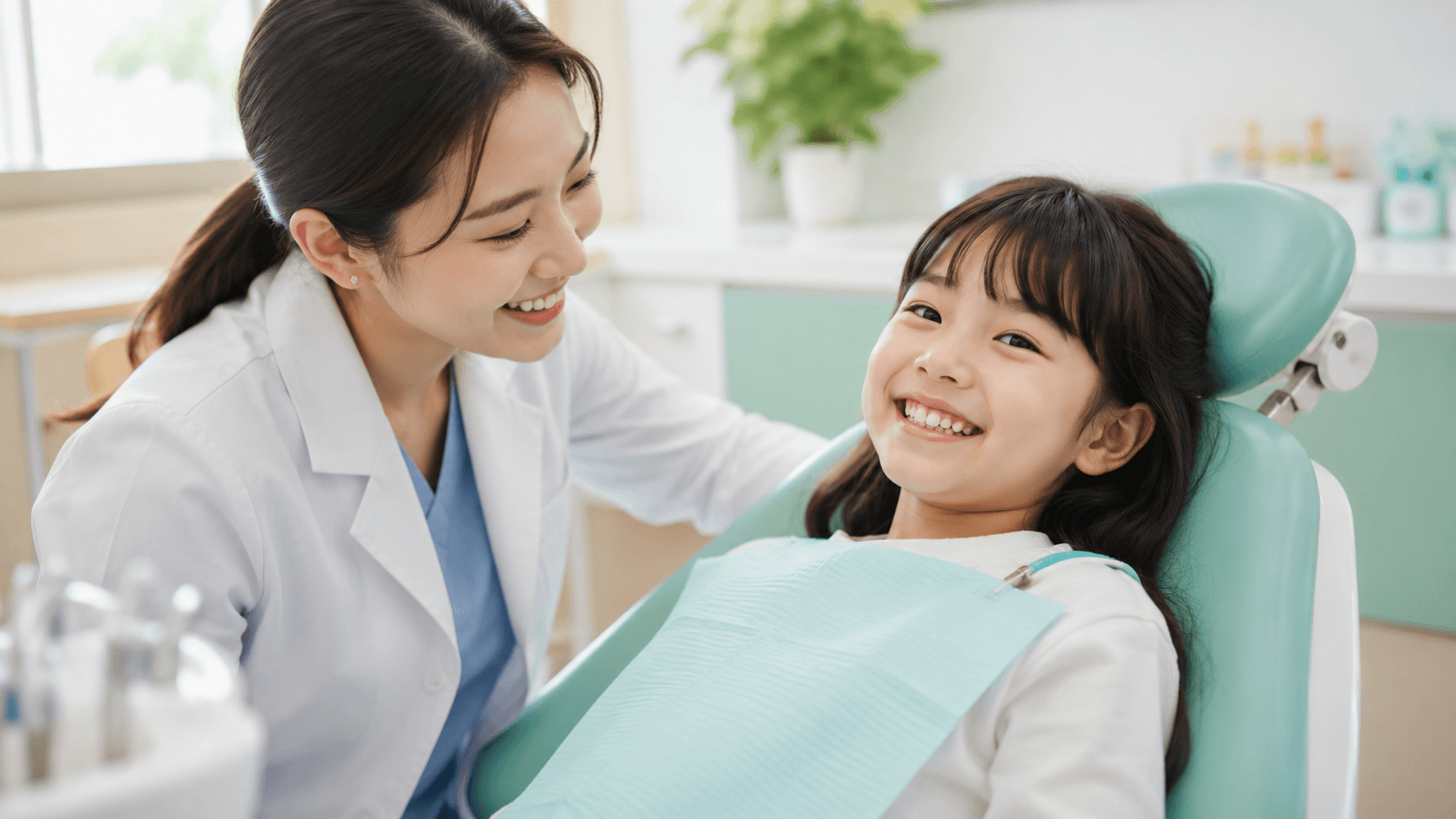
Taking Your Child to the Dentist in Korea: A Guide for Expat Parents
When to start, what to expect, and how to make dental visits easy for your child in Korea — in English, for international families.
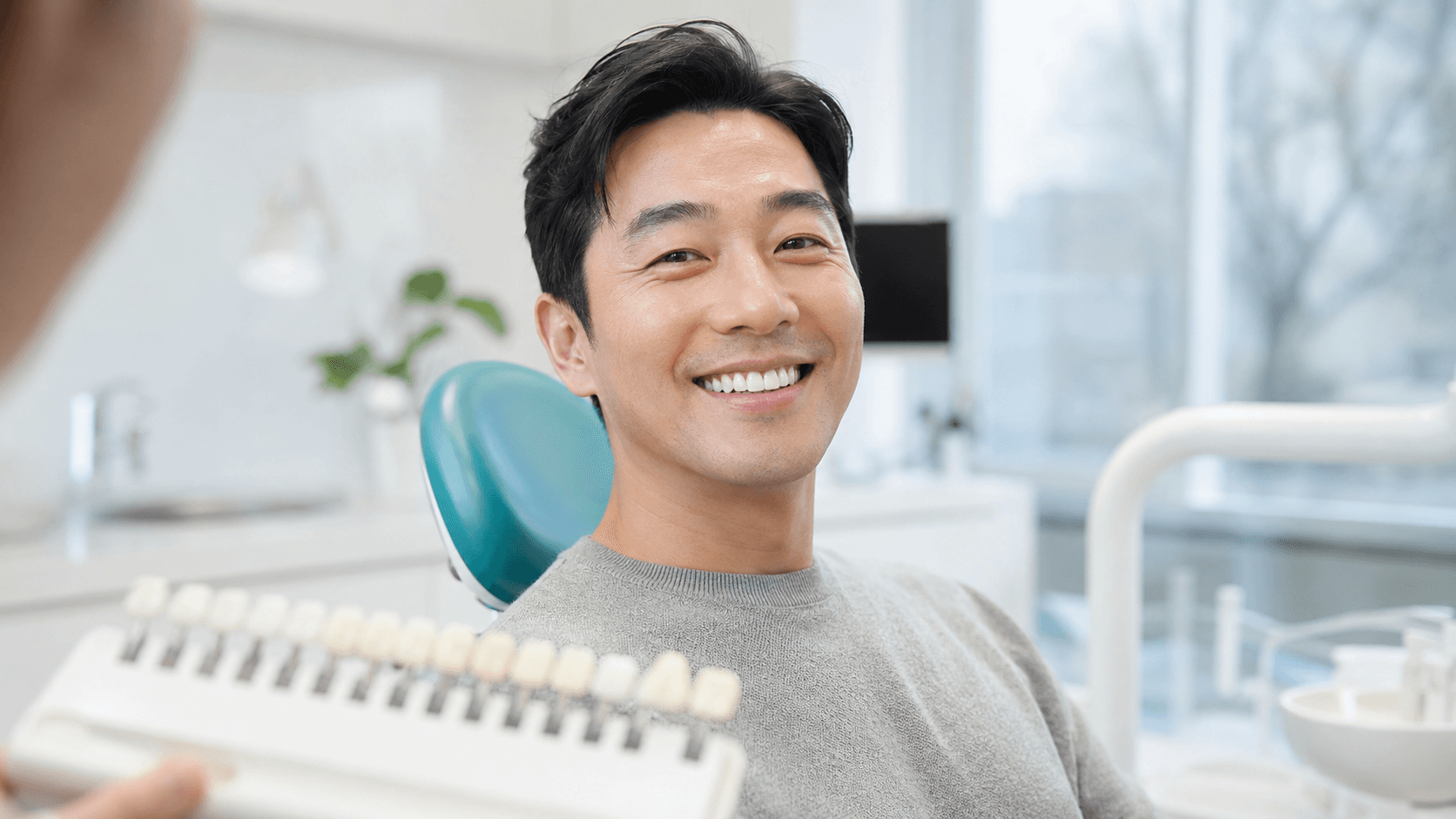
Dental Crowns and Bridges in Korea: Restoring Damaged and Missing Teeth
When a crown is needed, what a bridge asks of the teeth beside the gap, how materials compare, timing, and NHIS coverage — explained in English for foreign residents in Korea.

Your First Dental Visit in Korea: What to Bring and What to Expect
New to Korea? How to book, what to bring, and what happens at your first dental appointment — for English-speaking residents.
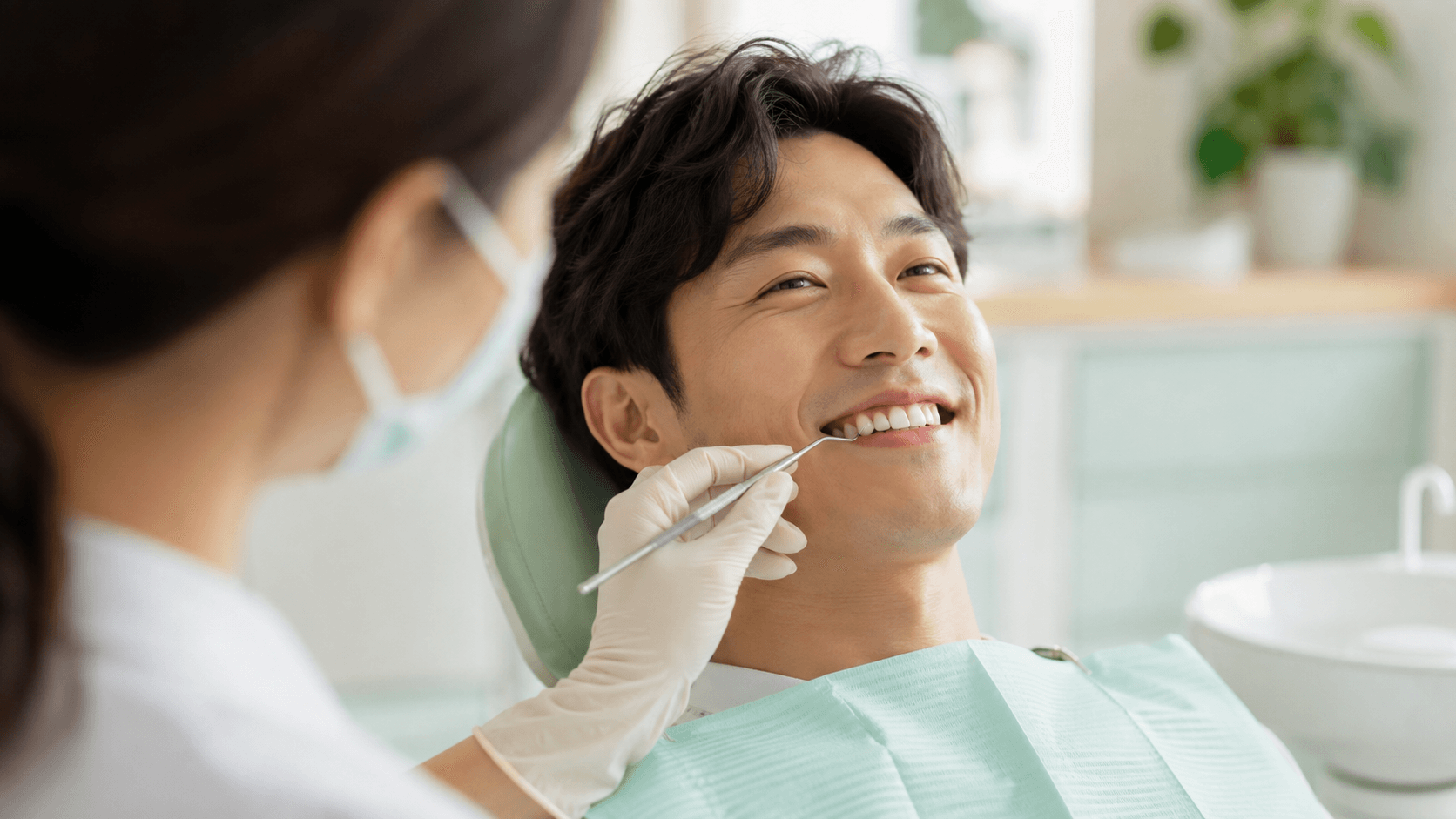
Dental Scaling in Korea: Yearly Teeth Cleaning Covered by NHIS
Korea's national insurance covers a professional teeth cleaning (scaling) once a year for adults. What it is, why it matters, and how to get it — in English.
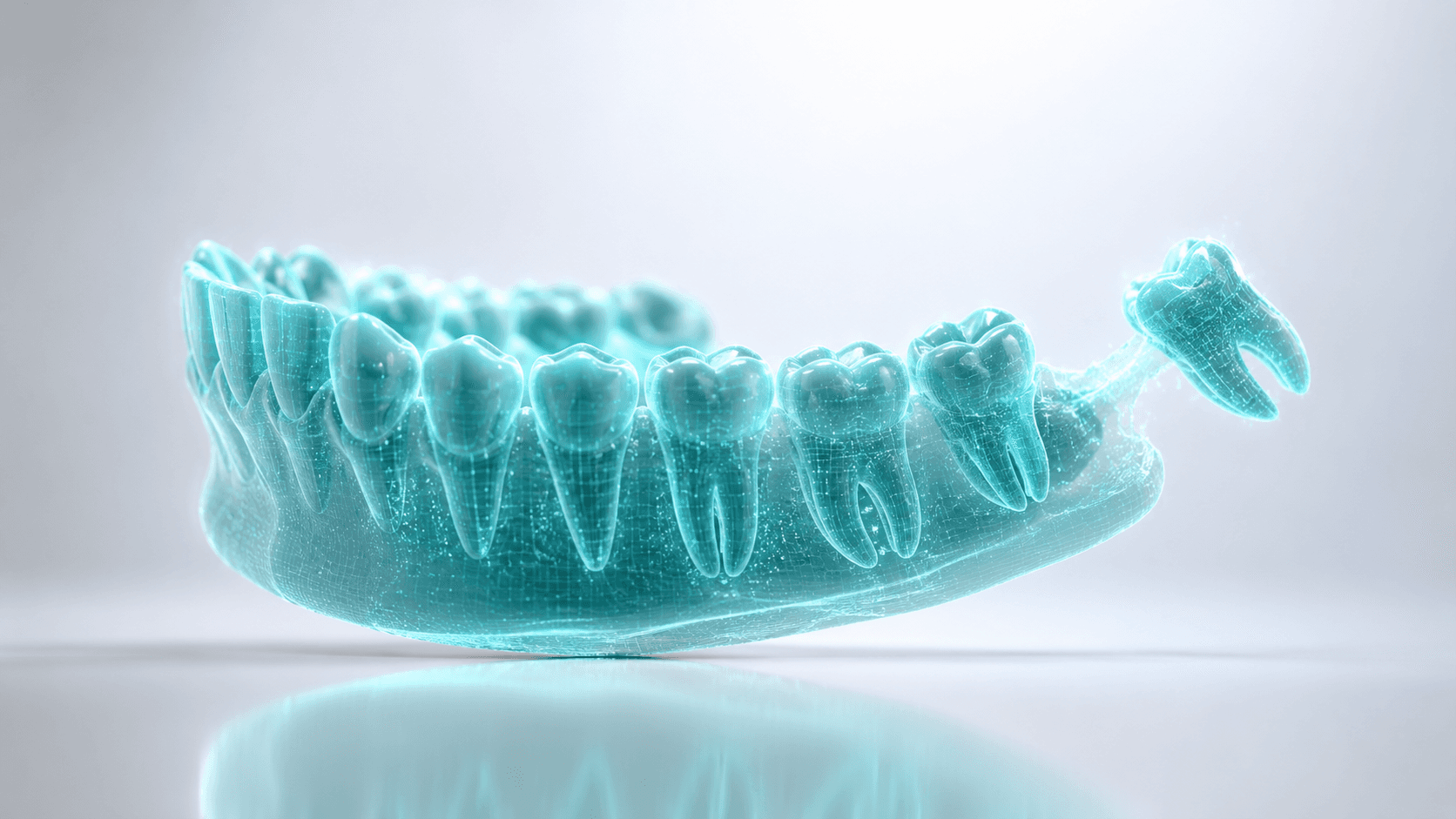
Wisdom Tooth Extraction in Korea for Foreigners
When wisdom teeth need to come out, how their position changes the difficulty, what recovery is really like, dry socket, and what NHIS covers — in English for foreign residents.
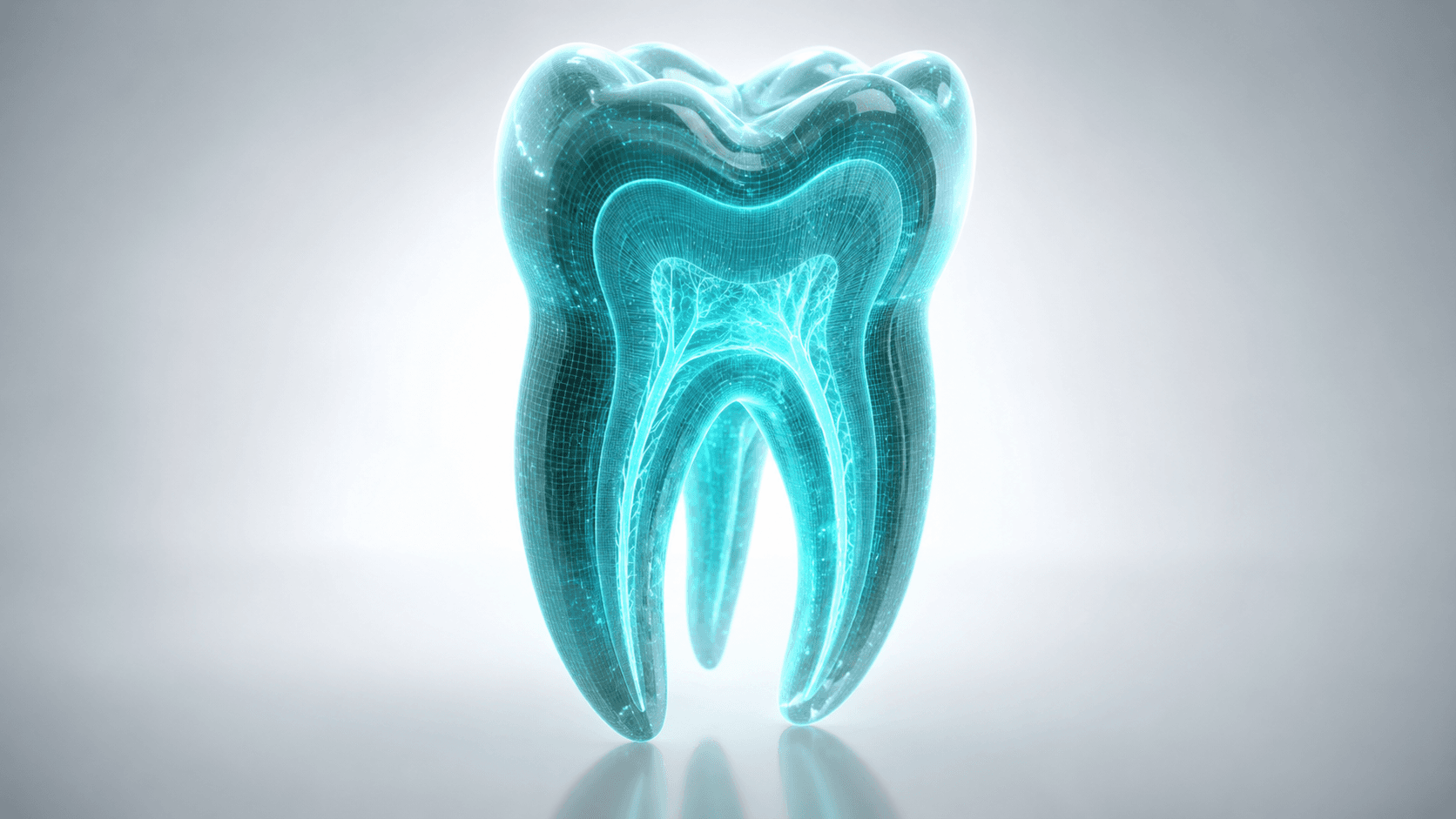
Root Canal Treatment in Korea: What to Expect
What a root canal actually involves, how it's diagnosed, how many visits it takes, why a crown follows — and what NHIS covers. Explained in English for foreign residents in Korea.
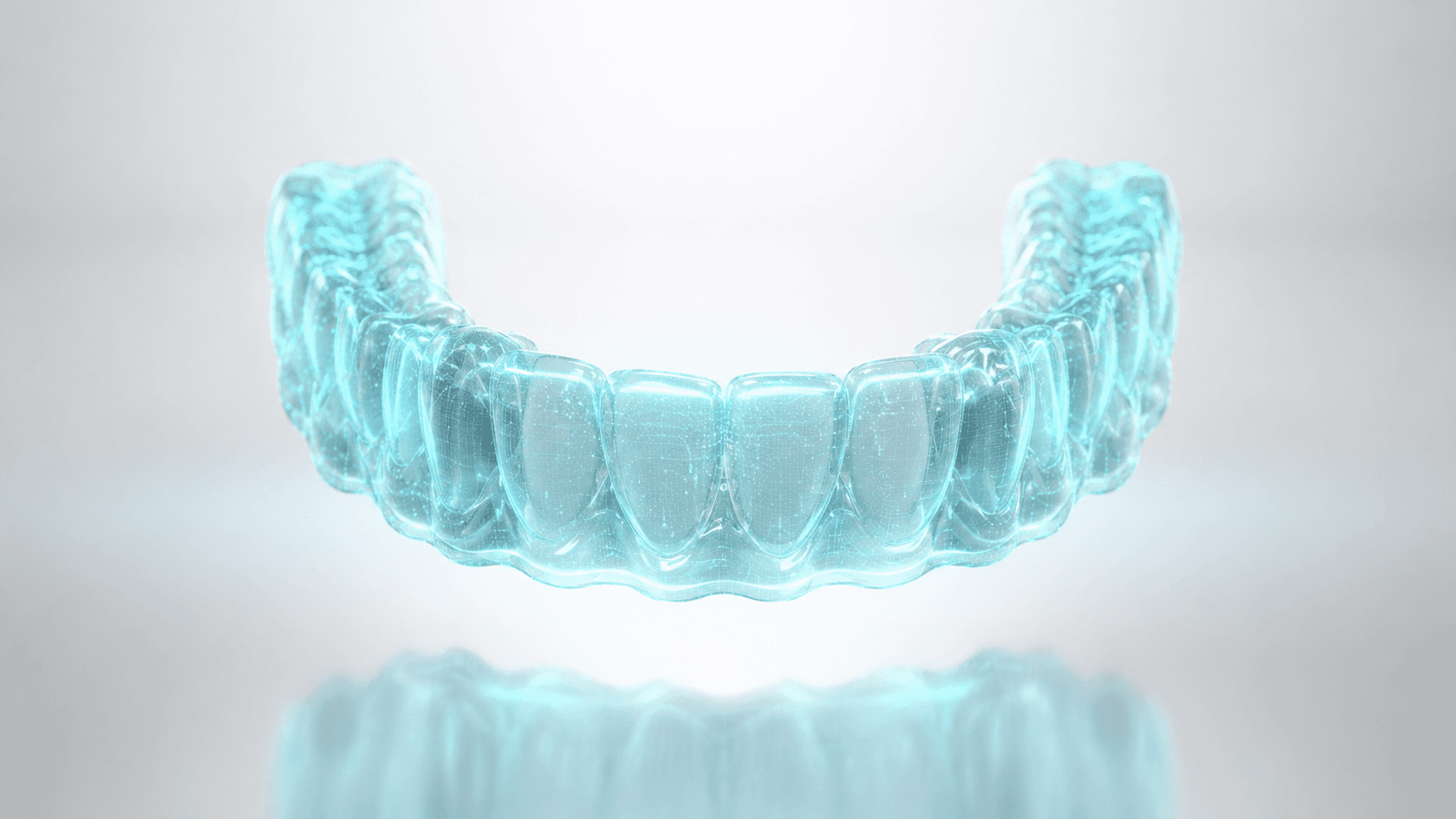
Braces and Clear Aligners in Korea for Adults
Adult orthodontics in Korea — metal and ceramic braces, clear aligners, and how to choose. What to expect as an English-speaking patient.
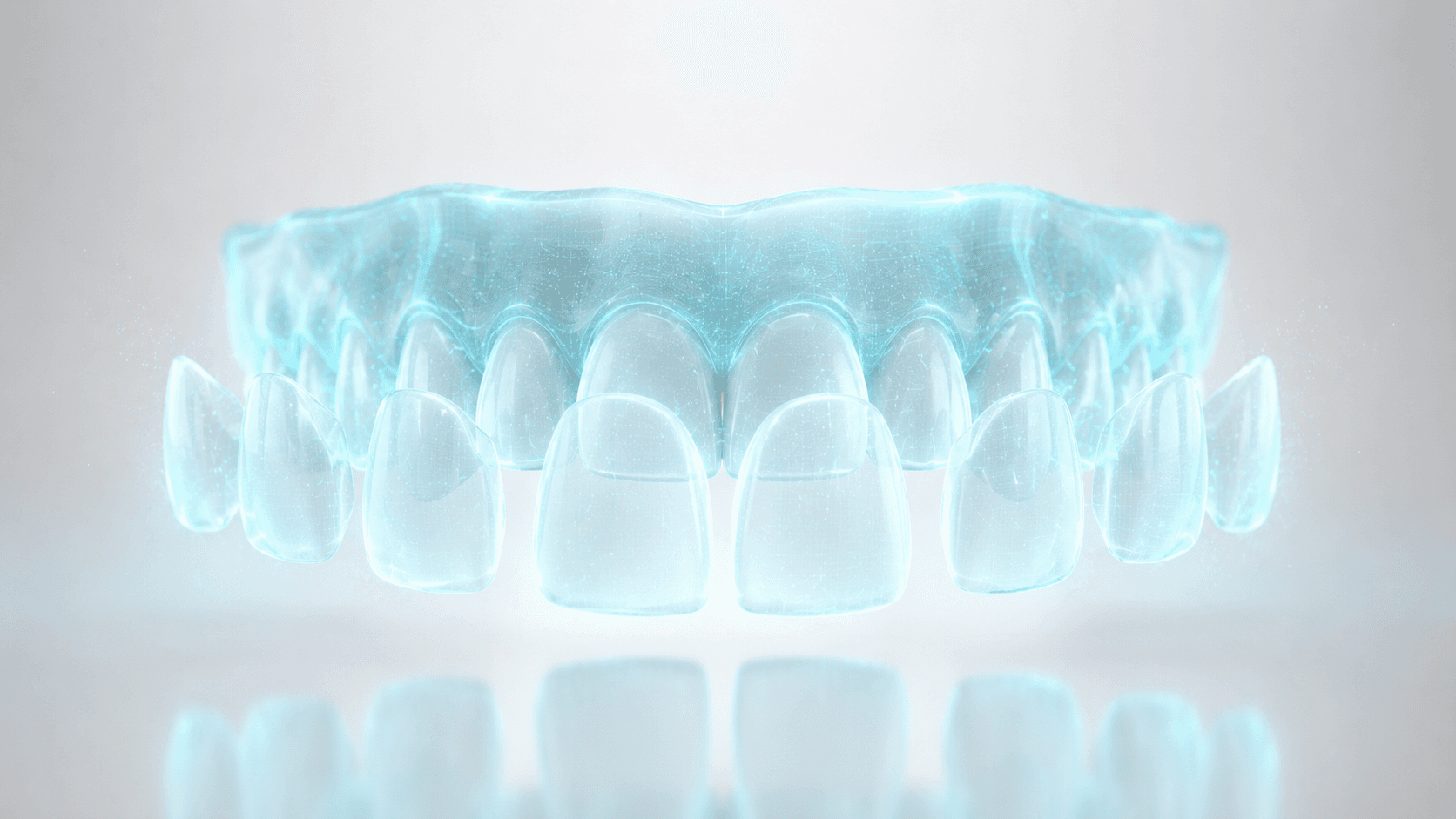
Veneers, Whitening and Cosmetic Dentistry in Korea
A plain-English guide to cosmetic dentistry in Korea — whitening, veneers, and ceramic crowns — and how to get a natural-looking result.
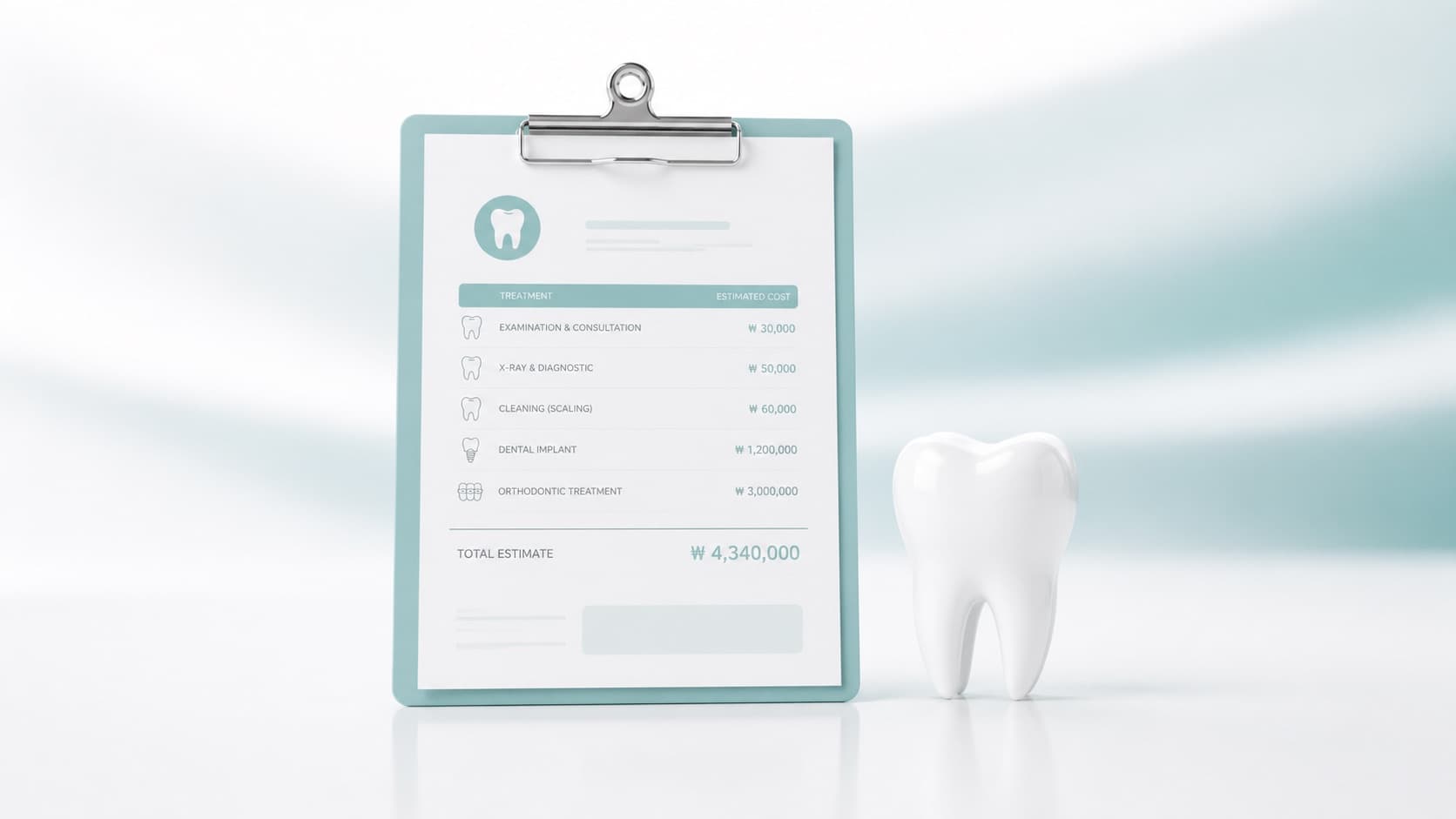
How Much Does Dental Treatment Cost in Korea?
What drives dental prices in Korea, what health insurance covers, and how to get a clear cost before you start — for foreign residents.
Does NHIS Cover Dental Treatment in Korea?
A plain-English rundown of what Korea's National Health Insurance covers for dental care — and what you'll pay out of pocket.
Toothache in Korea? What to Do as a Foreigner
A sudden toothache or dental emergency in a new country is stressful. Here's what to do first and how to get treated in English.
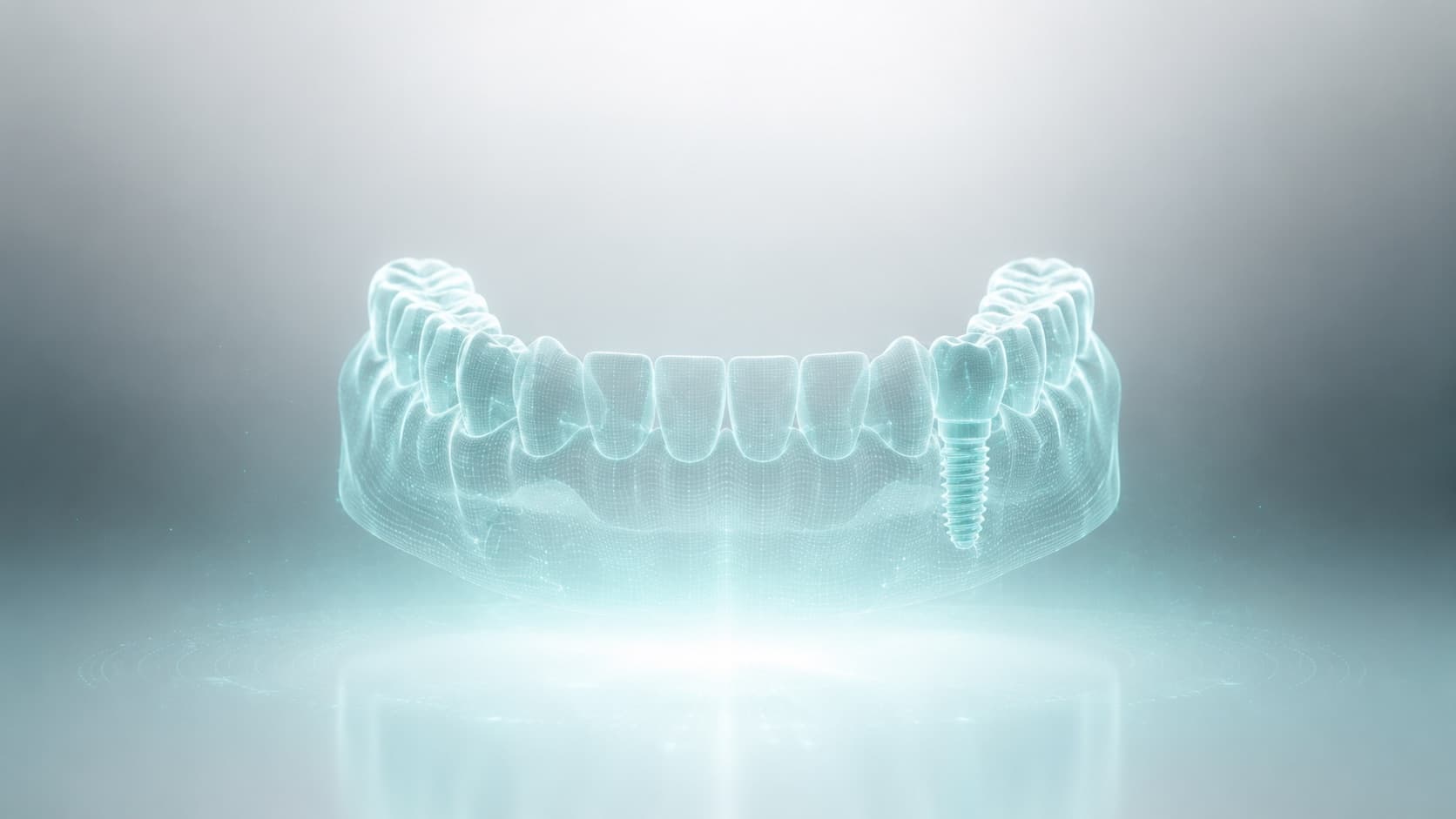
Dental Implants in Korea for Foreigners: Cost, Process & What to Expect
What implants involve, how the process works, and what to check before you book — for foreign residents in Korea.
Directions from your area
English-speaking dental care in Uijeongbu is closer than you think — step-by-step routes and travel times from nearby areas.
English-Speaking Dentist in Uijeongbu for Foreign Residents
Where we are in Uijeongbu, how to reach us from each part of the city, parking, and what to bring to a first visit — for foreign residents who'd rather not travel into Seoul.

English-Speaking Dentist for Dobong-gu Residents (Uijeongbu)
Dobong-gu is the closest Seoul district to us and sits on the same subway line — one direction, no transfers. Here's the route by station and what to expect.
English-Speaking Dentist for Nowon-gu Residents (Uijeongbu)
Nowon-gu spans three subway lines, so your route depends on which station you start from. Here's the simplest way from each, and what to expect on a first visit.
English-Speaking Dentist for Gangbuk-gu Residents (Uijeongbu)
Gangbuk-gu isn't on Line 1, but the connection is a single transfer at Chang-dong. Here's the route from Suyu, Mia and the Ui-Sinseol side of the district.
English-Speaking Dentist for Namyangju Residents (Uijeongbu)
Namyangju is spread across several rail lines, so the best route depends on which part you live in. Here's the trip from Byeollae, Dasan, Donong and Pyeongnae-Hopyeong.
English-Speaking Dentist for Yangju Residents (Uijeongbu)
Yangju's Line 1 stations run straight to Uijeongbu — but the new towns at Okjeong and Hoecheon aren't on the line yet. Here's the route from each part of the city.
English-Speaking Dentist for Pocheon Residents (Uijeongbu)
Pocheon has no subway station, which makes Uijeongbu the hub residents already travel to. Here's the bus and driving route, and how to fit treatment into fewer trips.
English-Speaking Dentist for Guri Residents (Uijeongbu)
Guri has two rail lines now, but only one of them points toward Uijeongbu. Here's the route that works, the one that doesn't, and what to expect on a first visit.
English-Speaking Dentist for Gapyeong Residents (Uijeongbu)
Gapyeong is the longest trip of the areas we serve, so this page is about making it count: the route via Cheongnyangni, the ITX option, and combining appointments.
English-Speaking Dentist for Dongducheon Residents (Uijeongbu)
Dongducheon sits on the same subway line as us — one direction, no transfers. Here's the route from each of the town's four stations, and what to expect on a first visit.