Dental care in Korea is covered in two layers: national insurance (NHIS) and any private or expat plan on top. Here's how enrolment works, what NHIS does and doesn't cover, and how to get the receipts you need to claim — in English.
For most foreign residents, dental care in Korea is covered in two layers: the national health insurance everyone uses (NHIS), and any private or employer/expat plan you add on top. Understanding both is how you avoid surprises — and claim back what you're owed. Here's how it works, in English.
Are you enrolled in NHIS?
If you live in Korea for six months or more, you are generally required to have National Health Insurance (NHIS) — either:
- Through your employer (직장), with premiums deducted from your salary, or
- As a local subscriber (지역), where you pay the premium directly.
NHIS gives you access to subsidised care, including some dental treatment. Your ARC (Alien Registration Card) is your ID at the clinic — bring it to every visit. If you're not sure of your status, check with NHIS or your employer.
What NHIS covers at the dentist
NHIS covers essential dental care — you pay only a share, usually around 30%:
- One scaling (cleaning) per year
- Basic fillings (amalgam and glass-ionomer)
- Extractions
- Root canal treatment
- Gum disease treatment
- Implants for patients aged 65 and over, in limited cases
What it does not cover (you pay privately):
- Teeth whitening, veneers, and other cosmetic work
- Braces and aligners for cosmetic straightening
- Tooth-coloured composite fillings for adults
- Implants for most adults under 65
Private and expat dental insurance
Because NHIS leaves the cosmetic and higher-cost work to you, many residents add a second layer:
- Korean private dental insurance can top up NHIS for private-pay treatments — check waiting periods and annual limits.
- Employer or global/expat health insurance often includes dental. Check your policy for the annual limit and whether treatment needs pre-approval.
- Travel insurance usually only covers emergency pain relief, not planned treatment.
How to claim and get reimbursed
Whether you claim on a Korean private plan or a home-country policy, you'll need paperwork from the clinic:
- An itemised receipt (진료비 영수증)
- A treatment detail statement (진료비 세부내역서), which lists each procedure
Ask for these after treatment, keep them with your diagnosis, and submit them to your insurer following their process. For a home-country claim, an English-language summary of the treatment helps.
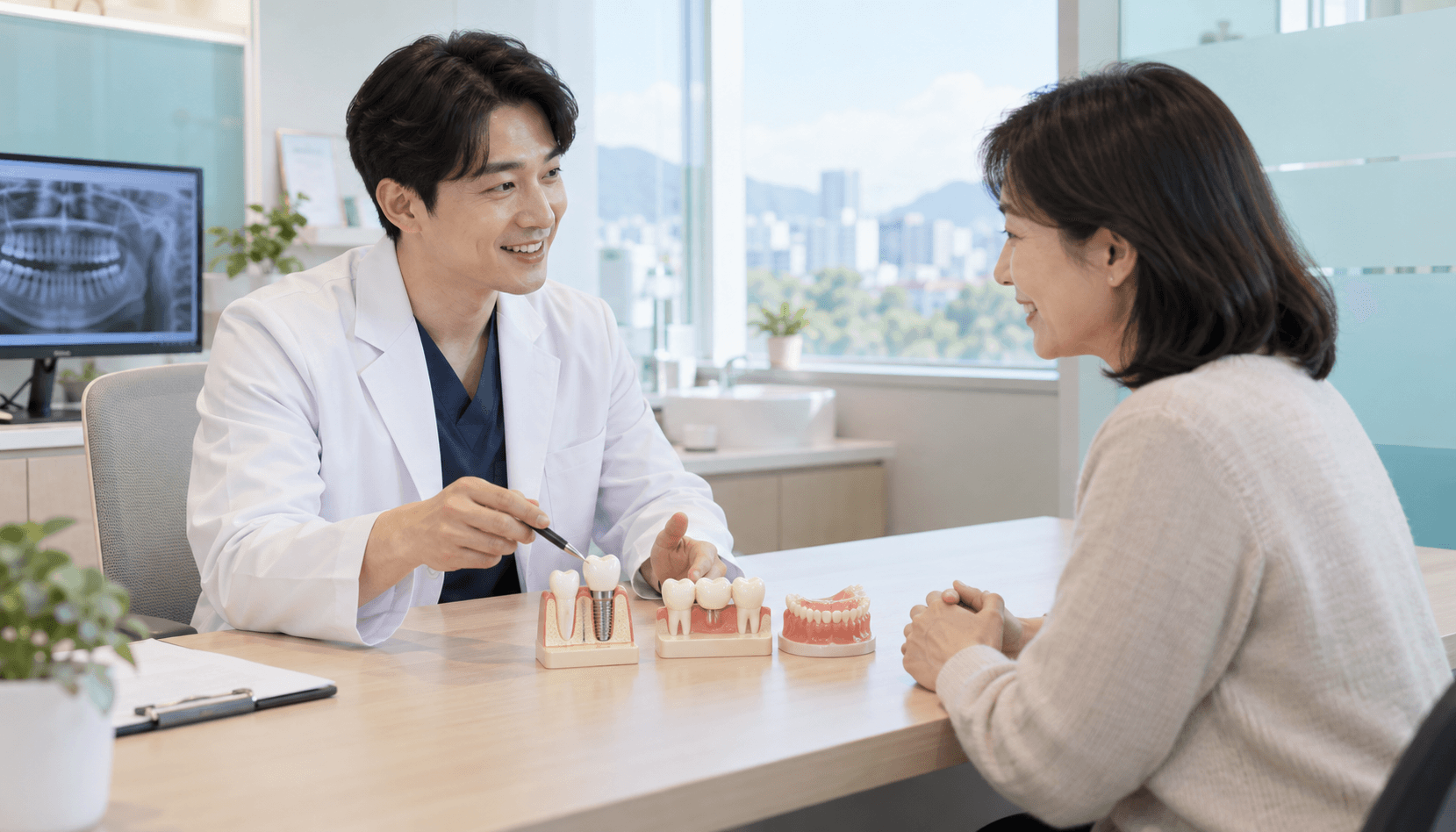
At Seoul Lab Dental: we explain what NHIS covers, give you an itemised written estimate before treatment, and provide the receipts and documents you need to claim on private or expat insurance — all in English.
Frequently asked questions
Do foreigners have to have Korean national insurance (NHIS)?
Generally yes, if you live in Korea for six months or more — either through your employer or as a local subscriber. NHIS gives you access to subsidised care, including essential dental treatment. Check your status with NHIS or your employer if you're unsure.
Does NHIS cover dental treatment?
It covers essentials — a yearly scaling, basic fillings, extractions, root canal, and gum treatment — with you paying a share, usually around 30%. Cosmetic work (whitening, veneers, cosmetic braces) is private pay, and implants are covered only for patients 65 and over in limited cases.
Can my expat or home-country insurance reimburse dental costs?
Often, for planned treatment. Ask the clinic for an itemised receipt and a treatment detail statement, then submit them to your insurer. Check your annual limit and whether pre-approval is needed before you start.
What do I bring to a dental appointment?
Your ARC (Alien Registration Card) — it's your ID for NHIS billing. If you plan to claim on private or expat insurance, ask for the itemised receipt and treatment detail statement afterwards.
Can coverage and costs be explained in English?
Yes. At Seoul Lab Dental we explain what NHIS covers, give you a written estimate, and prepare the documents you need to claim — all in English — before treatment begins.
Want a clear estimate for your treatment?
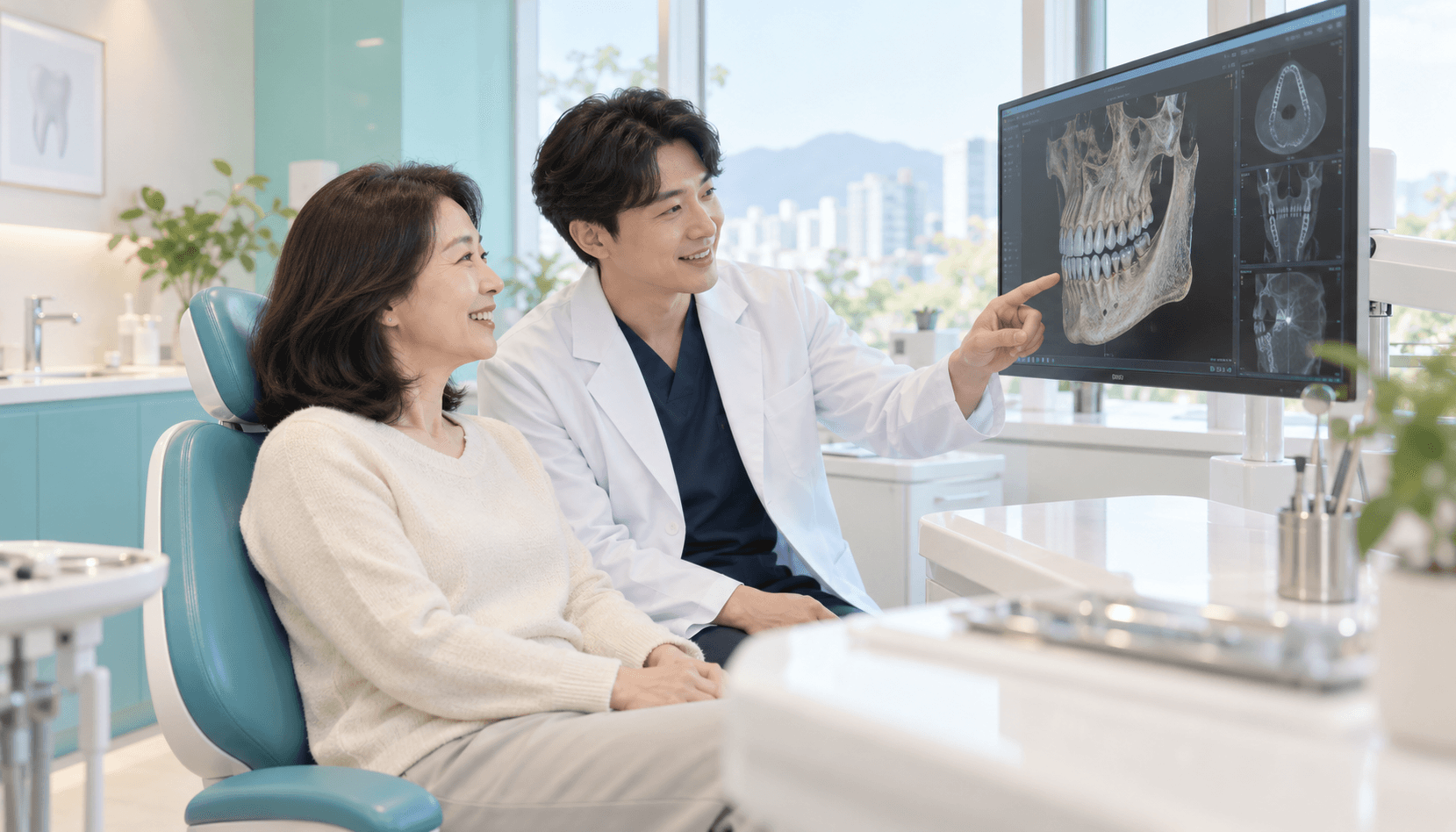
Book a 3D scan and consultation — you'll leave knowing your treatment plan and exact cost.
Get my estimate