Dentures are a proven, lower-cost way to replace missing teeth — and modern ones fit and look far better than you might expect. Here are the types, how they compare with implants, what national insurance covers, and how to live with them — in English.
When you're missing several teeth — or all of them — dentures are a proven, lower-cost way to restore your smile and your bite. Modern dentures fit and look far better than the ones you may remember, and in Korea you have the full range, including options that clip onto implants. Here's how they work, in English for foreign residents.
Your main options
- Full (complete) dentures — replace all the teeth in the upper or lower jaw. They rest on the gums and are removable.
- Partial dentures — replace a few missing teeth and clip onto the healthy teeth around the gap.
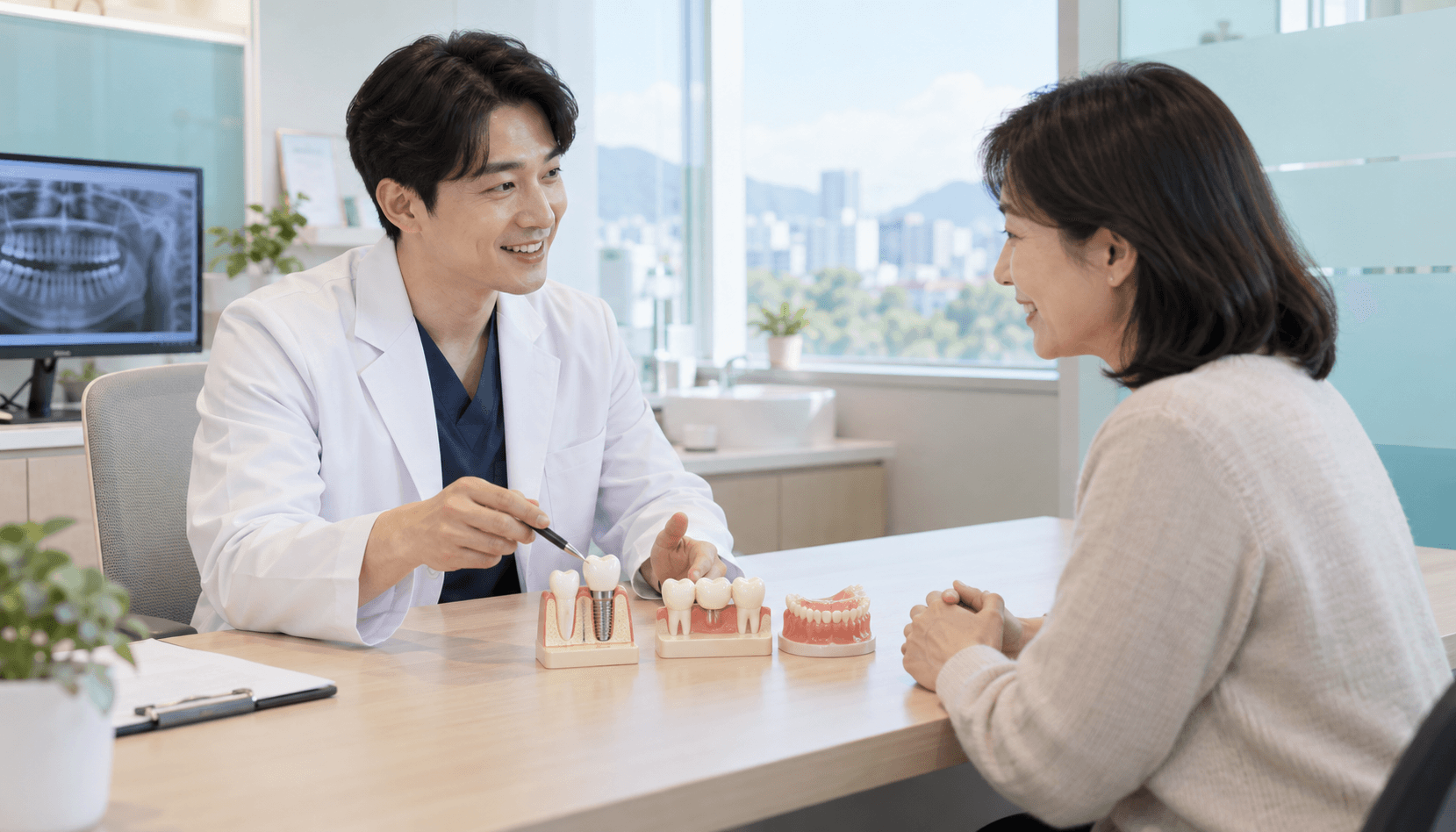
- Implant-supported dentures (overdentures) — a denture that snaps onto a small number of dental implants, so it stays firmly in place instead of resting on the gums.
Dentures or dental implants?
Both replace missing teeth, but they feel and cost different things:
| Dentures | Dental implants | |
|---|---|---|
| In your mouth | Removable — take out to clean | Fixed in the jaw |
| Feel | Very good, but can take adjustment | Closest to natural teeth |
| Upfront cost | Lower | Higher |
| Jawbone | Doesn't stop bone shrinking over time | Helps preserve the bone |
| Timeline | Faster | A few months (healing) |
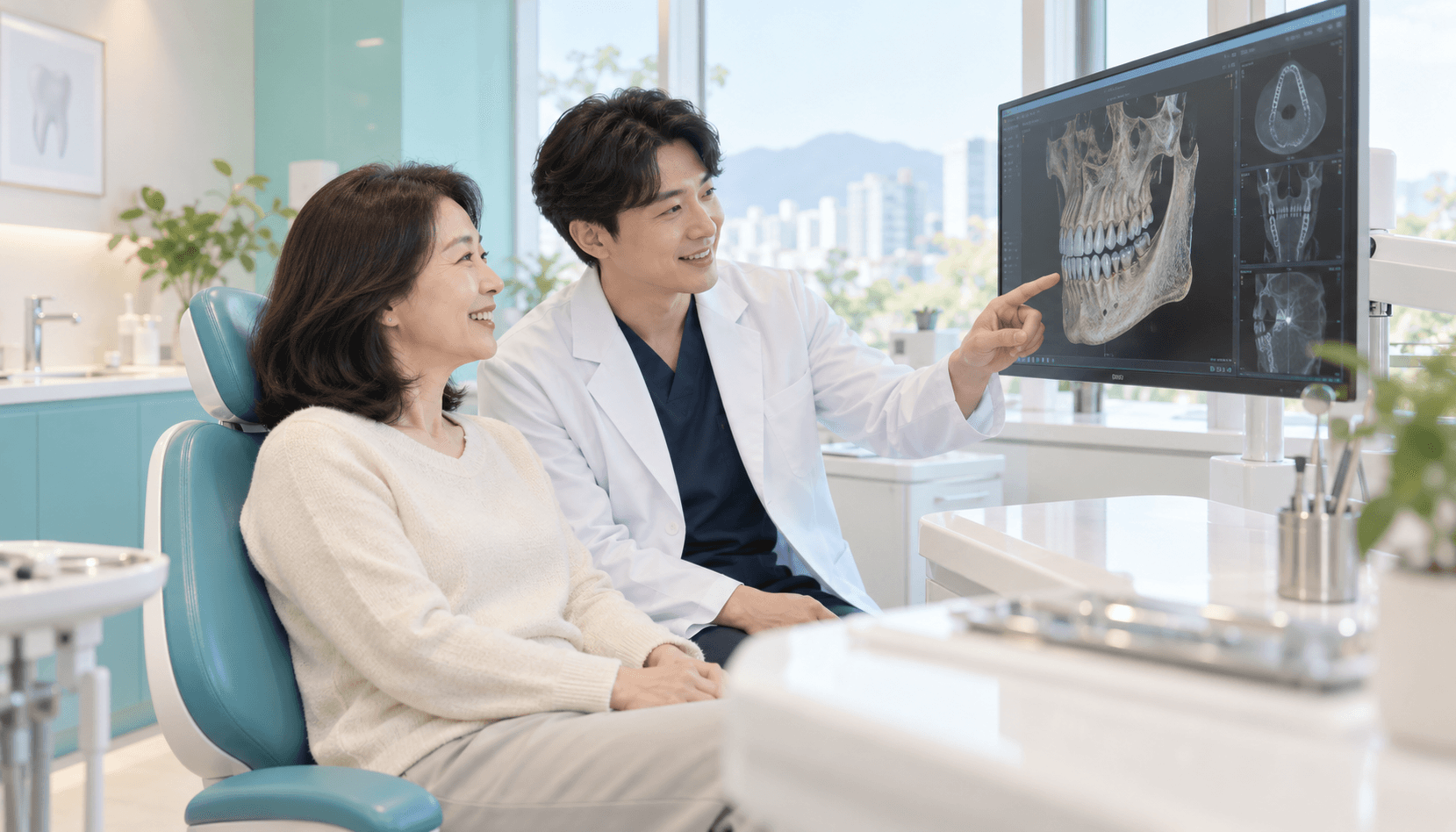
It isn't always one or the other. An implant-supported denture clips onto just two to four implants — you get much of the stability of implants at a lower cost than replacing every tooth with its own implant. A consultation and 3D scan will show what suits your jaw and budget.
What the process looks like
- Consultation and impressions or a 3D scan — the dentist checks your gums and any remaining teeth and plans the fit.
- Fitting — your dentures are made to your mouth, then tried in and adjusted so the bite feels right.
- Settling in — small adjustments over the first weeks as your mouth gets used to them.
Cost and insurance
In Korea, NHIS covers dentures for patients aged 65 and over — both full and partial — with the patient paying a share of the cost (around 30%). For most adults under 65 they're private pay. As always, ask for an itemised written estimate after your consultation, and check whether adjustments and follow-ups are included.
Living with dentures
- Expect a couple of weeks to adjust — start with softer foods and practise speaking.
- Clean them daily and, in most cases, take them out at night and keep them in water.
- See your dentist if you get sore spots or the fit feels loose. Over time your jaw changes shape, so dentures need occasional relines to keep fitting well.
At Seoul Lab Dental: we talk through full, partial, and implant-supported options honestly — including whether an implant-supported denture is worth it for you — and give you the plan and cost in writing, in English, before anything starts.
Frequently asked questions
Does NHIS cover dentures in Korea?
Yes, for patients aged 65 and over — both full and partial dentures are covered, with the patient paying a share of the cost (around 30%). For most adults under 65, dentures are private pay. Ask the clinic for a written, itemised estimate.
Dentures or implants — which is better?
It depends on your jaw, budget, and priorities. Implants feel closest to natural teeth and help preserve the jawbone, but cost more and take a few months. Dentures cost less upfront and are faster. An implant-supported denture is a popular middle path — the stability of implants at a lower cost.
Do dentures hurt, and how long until I get used to them?
New dentures often cause a few sore spots and feel bulky at first — that's normal. Most people adjust within a couple of weeks, and the dentist smooths out any sore spots at follow-up visits. Start with soft foods and practise speaking.
How do I look after dentures?
Clean them every day, and in most cases take them out at night and keep them in water. Because your jaw slowly changes shape, dentures need occasional relines or remakes to keep fitting well — see your dentist if they loosen or rub.
Can I get this explained in English?
Yes. At Seoul Lab Dental we explain your denture options, how they compare with implants, and the cost — all in English — before treatment begins.
Want a clear estimate for your treatment?
Book a 3D scan and consultation — you'll leave knowing your treatment plan and exact cost.
Get my estimate