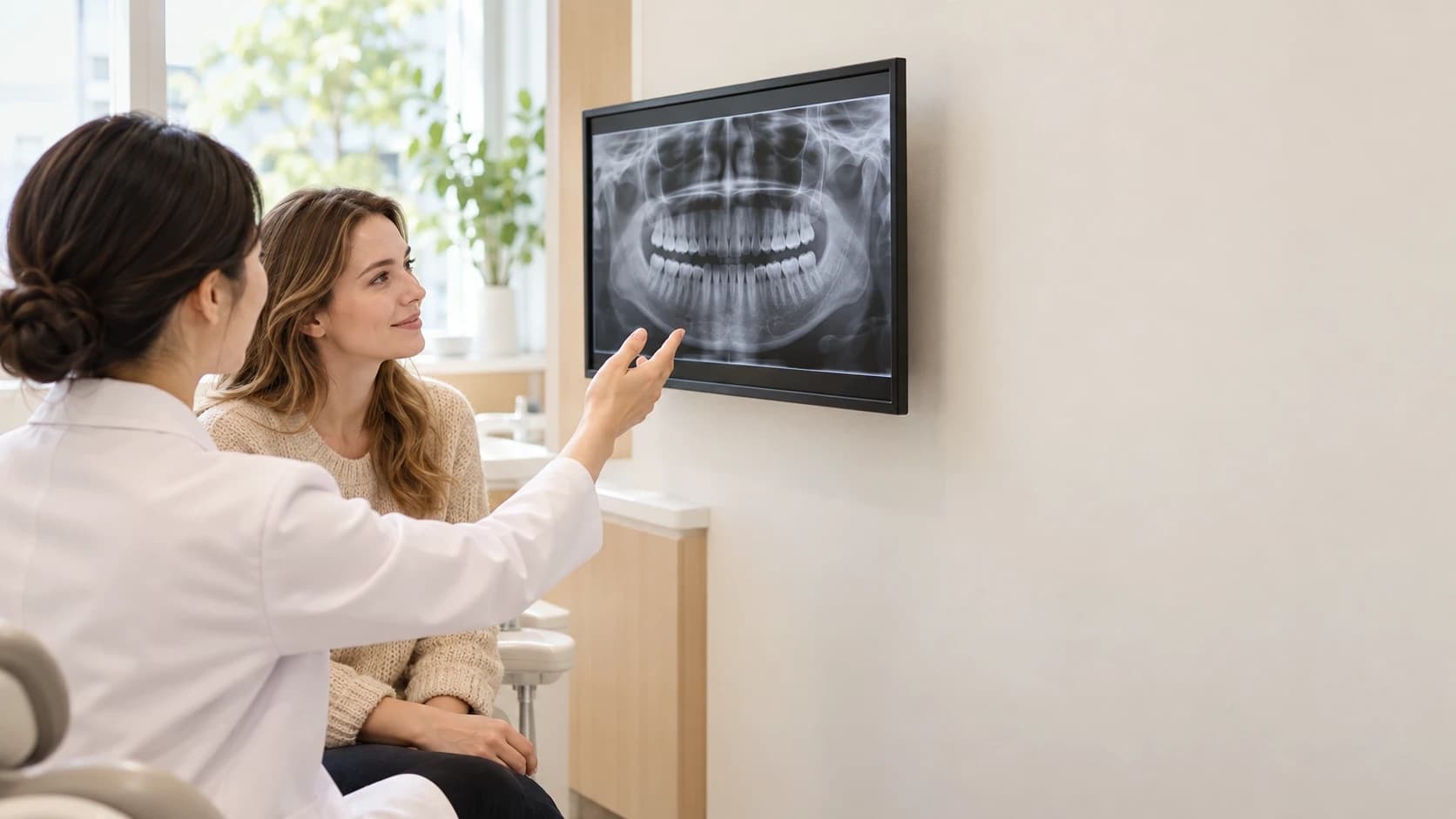
If you're enrolled in Korea's National Health Insurance, it applies to your dental care the same way it does for Korean nationals. It covers the essentials rather than everything — here's exactly where that line falls, and what you'll actually pay.
If you have an Alien Registration Card and qualifying residency, you're most likely enrolled in NHIS — and it applies to dental care the same way it does for locals. But NHIS covers essentials, not everything, so it helps to know where the line is.
First: are you actually enrolled?
This catches people out, because enrolment isn't automatic in the same way for everyone.
- Employed? Your workplace enrols you and the premium comes out of your pay, shared with your employer. You're covered from the start of employment.
- Not employed, a student, or self-employed? You're in the regional scheme, and foreign residents are generally required to join after a qualifying period of residence. You'll receive a monthly bill.
- Just arrived? There's a waiting period before regional coverage starts. During it, you pay the full fee at the dentist.
- Dependent on a spouse's coverage? That's possible, and it has to be registered — it doesn't happen by itself.
What matters here is that nationality isn't the criterion — enrolment is. A foreign resident who's enrolled pays exactly what a Korean national pays for the same covered treatment. If you're unsure of your status, NHIS runs a foreign-language helpline, and your clinic can check your eligibility when you hand over your ARC.
Generally covered (in part)
NHIS typically covers a share of medically necessary dental care:
- Exams and diagnosis
- Many fillings and extractions
- Root canal treatment
- Scaling (cleaning) — usually once a year for adults
- Limited implant coverage for older patients (age and case conditions apply)
You still pay a co-payment on covered treatment — it just isn't full price.
The covered items worth knowing in detail
Scaling. Adults aged 19 and over get one covered scaling per year. The year runs on the calendar, not from your last appointment — so a cleaning in December and another the following January are both covered. If you've never used it, you're leaving the cheapest dentistry there is on the table.
Fillings. Restoring a decayed tooth is covered. The material can change that: standard restorative materials are covered, while some aesthetic options are not. Ask which you're getting.
Root canal treatment. Covered. The crown that usually has to follow is treated separately — often partly covered when it's restoring a damaged tooth, and worth asking about at the start rather than discovering at the end.
Extractions. Covered when medically necessary, including wisdom teeth. The amount varies with difficulty — a straightforward extraction and a sideways impacted tooth are not the same procedure.
Gum treatment. Scaling for gum disease beyond the annual preventive one, and deeper cleaning under the gum, are covered when there's a diagnosis behind them.
Implants, for patients 65 and over. Up to two implants in a lifetime, with the patient paying a share of the cost — around 30%. It applies to partially edentulous patients; terms are set by NHIS.
Dentures, for patients 65 and over. Full and partial, with a share of the cost, on a replacement cycle set by NHIS.
Usually not covered (private pay)
- Implants for most adults
- Orthodontics (braces and aligners)
- Cosmetic work — whitening and veneers
The distinction NHIS draws is function versus appearance. A crown that restores a broken tooth is function. A veneer that changes the colour of a sound tooth is appearance. The same material can fall on either side depending on why it's being placed, which is why your dentist should tell you which category your treatment is in before it starts.
What this means for you
- Budget for basic care as partly covered, and for implants/ortho/cosmetic as private pay.
- Private or expat dental insurance can help with non-covered treatment.
What to bring, and what happens at the desk
Bring your ARC. That's usually all that's needed — the clinic looks up your NHIS status from it, so you don't need to carry a separate card. If you've just enrolled and the system hasn't caught up, bring a certificate of enrolment.
At the end you'll be handed a receipt that splits the total into the covered portion and your co-payment. If you hold private or employer dental insurance, ask for an itemised receipt (진료비 세부내역서) — that's the document a claim is assessed on, and it's easier to get on the day than to request later.
Reading your bill
Two lines matter. One is the total for covered treatment, where your co-payment is a share of a nationally set fee. The other is 비급여 — non-covered items, where you pay the full amount and the clinic sets the price.
That second line is the one to ask about before treatment, not after. It's also the only part where clinics differ on price, which is why comparing quotes is really about comparing the 비급여 items. Our guide to dental costs in Korea explains how to read an estimate.
Common misunderstandings
"NHIS is only for Koreans." No — enrolment is the criterion, and enrolled foreign residents are treated identically.
"Covered means free." No — you pay a co-payment on covered treatment.
"My travel insurance covers dental." Usually only emergencies and pain relief, not planned treatment. Check the wording before relying on it.
"I'll get the implant covered because I'm over 65." Only up to two, only once, and only if your case fits the conditions. Confirm before planning around it.
Not sure what applies to you? Message us in English before your visit and we'll explain what's likely covered for your treatment, and give you a written estimate after your exam.
Coverage rules change and depend on your specific situation, so treat this as a starting point rather than a final answer.
Frequently asked questions
Does NHIS cover dental treatment for foreign residents?
Yes, if you're enrolled. Enrolment is the criterion, not nationality — an enrolled foreign resident pays exactly what a Korean national pays for the same covered treatment. Bring your ARC and the clinic can check your status.
Is scaling covered every year?
For adults aged 19 and over, one scaling per year is covered. The year runs on the calendar, so a cleaning in December and another the following January are both covered.
Are implants covered by NHIS?
Only in limited cases — mainly patients aged 65 and over, up to two implants in a lifetime, with the patient paying a share of the cost (around 30%). For most adults implants are private pay. Terms are set by NHIS, so confirm what applies to you.
Why was part of my bill not covered?
Your receipt separates covered treatment from 비급여 (non-covered) items. NHIS draws the line between function and appearance — restoring a damaged tooth is covered, changing the look of a sound one generally isn't. Ask which category your treatment falls into before it starts.
I just arrived in Korea — am I covered yet?
If you're employed, your workplace enrols you from the start of employment. If you're in the regional scheme, there's a qualifying period of residence before coverage begins, and you pay full price at the dentist until then.
What should I ask for if I have private dental insurance?
An itemised receipt (진료비 세부내역서). That's the document a private or employer claim is assessed on, and it's much easier to get on the day than to request afterwards.
Want a clear estimate for your treatment?
Book a 3D scan and consultation — you'll leave knowing your treatment plan and exact cost.
Get my estimate