Dental costs in Korea depend on the procedure, whether national insurance applies, and the clinic. Here's how pricing works — and how to get a clear number before you commit.
"Just tell me what it costs" is the first thing most international patients ask. The honest answer is that it depends — but it depends on a few predictable things, and a good clinic will put the number in writing before you start.
What affects the price
- The procedure. A checkup or cleaning is very different from an implant or full orthodontic treatment.
- Whether NHIS applies. Some basic treatments are partly covered by national insurance; most implants, orthodontics, and cosmetic work are private pay.
- Materials and brand. Implant systems, crown materials, and aligner brands vary in price.
- Whether extra steps are needed — for example, a bone graft before an implant.
Covered vs. private treatment
As a rough guide:
| Treatment | Typically |
|---|---|
| Checkup, basic fillings, extractions | Often partly covered by NHIS |
| Scaling (cleaning) | Partly covered once a year for most adults |
| Implants | Usually private pay (limited NHIS cover for older patients) |
| Orthodontics, whitening, veneers | Private pay |
What drives the cost of each treatment
Costs cluster by treatment type. Here's what moves the number for the common ones:
- Dental implants — mostly how many you need, the implant brand, and whether you need a bone graft.
- Clear aligners and braces — priced by how complex your case is and how long it takes; aligners are usually the most expensive orthodontic option.
- Crowns and bridges — the material (zirconia vs metal-ceramic) is the main driver.
- Dentures — full, partial, or implant-supported, each at a different price point.
- Fillings, root canal, scaling, and extractions — the everyday treatments, and the ones NHIS most often helps with.
Paying for treatment — and claiming it back
A few practical things about how payment works in Korea:
- Instalments are common. For bigger treatments like implants or orthodontics, many clinics let you spread the cost over the treatment period — ask upfront.
- You'll get an itemised receipt. Keep it, along with the treatment detail statement, to claim on private or expat dental insurance.
- Card is fine. Korean clinics take cards — you don't need to carry cash.
- No surprise add-ons. With a written estimate agreed first, the final bill should match it; if the plan changes mid-treatment, a good clinic explains the cost before doing the work.
How to avoid surprises
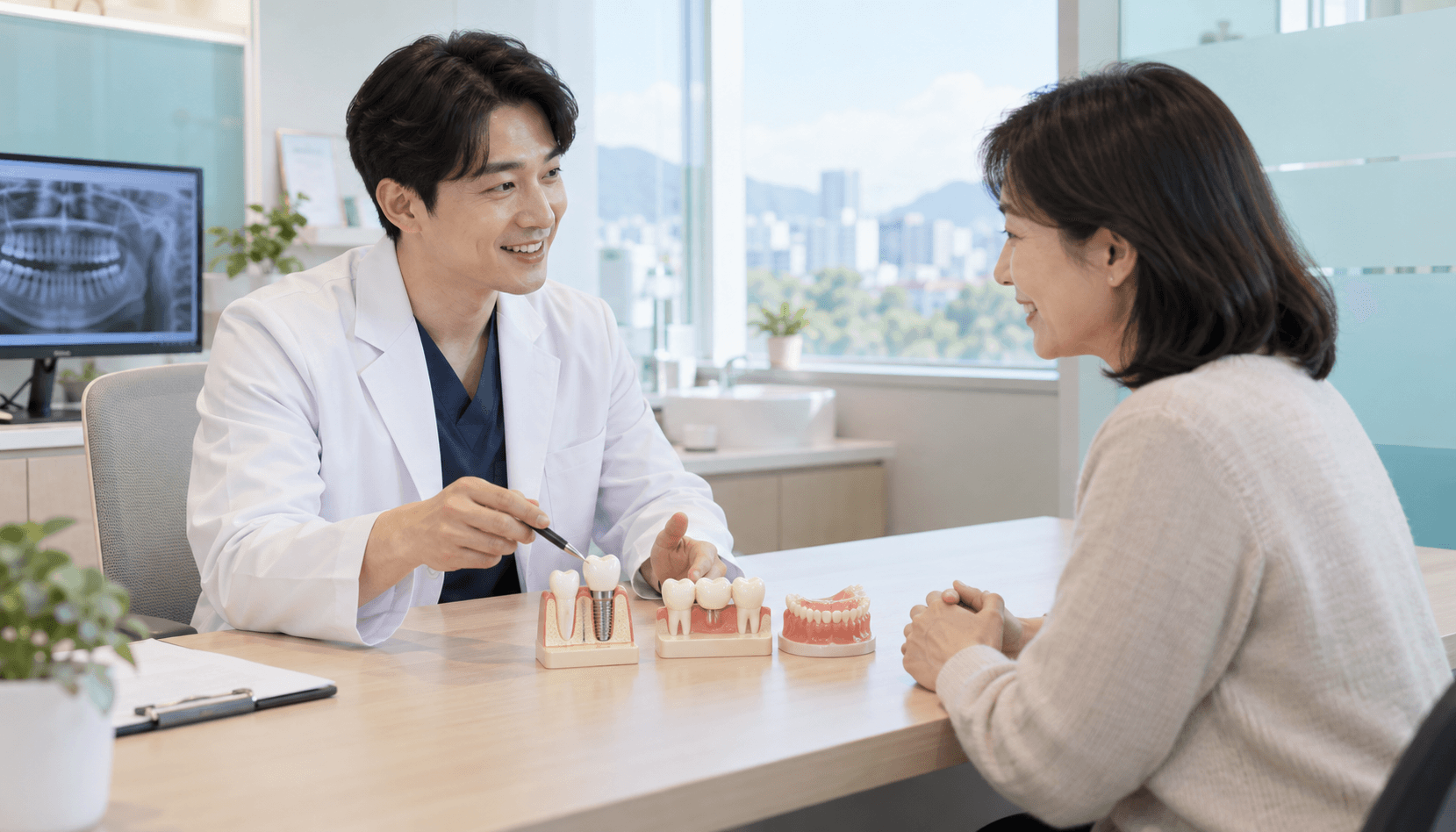
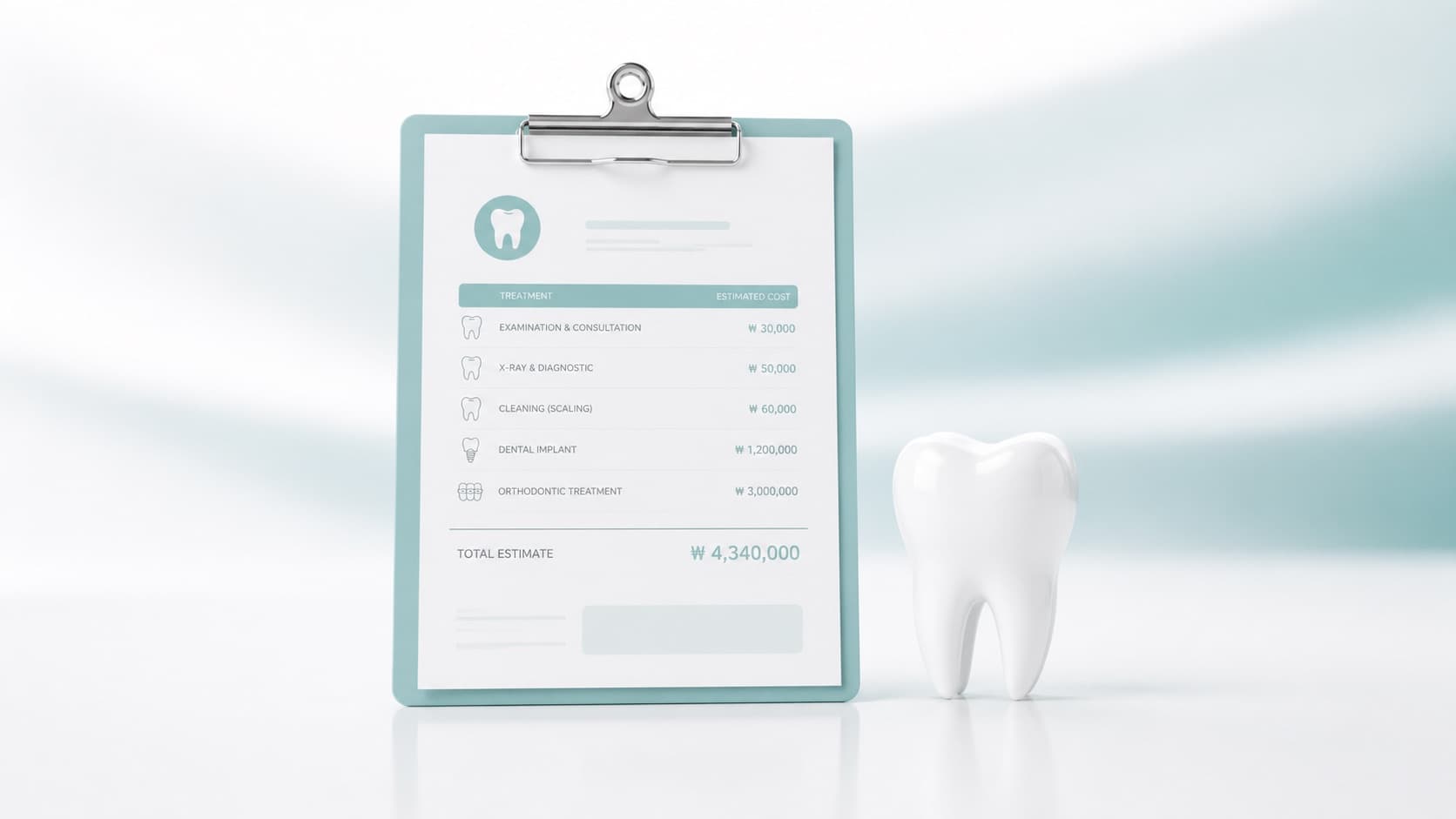
Ask for a written estimate that lists each part separately — for an implant, that means the fixture, abutment, crown, and any grafting. That way you can see exactly what you're paying for and compare fairly.
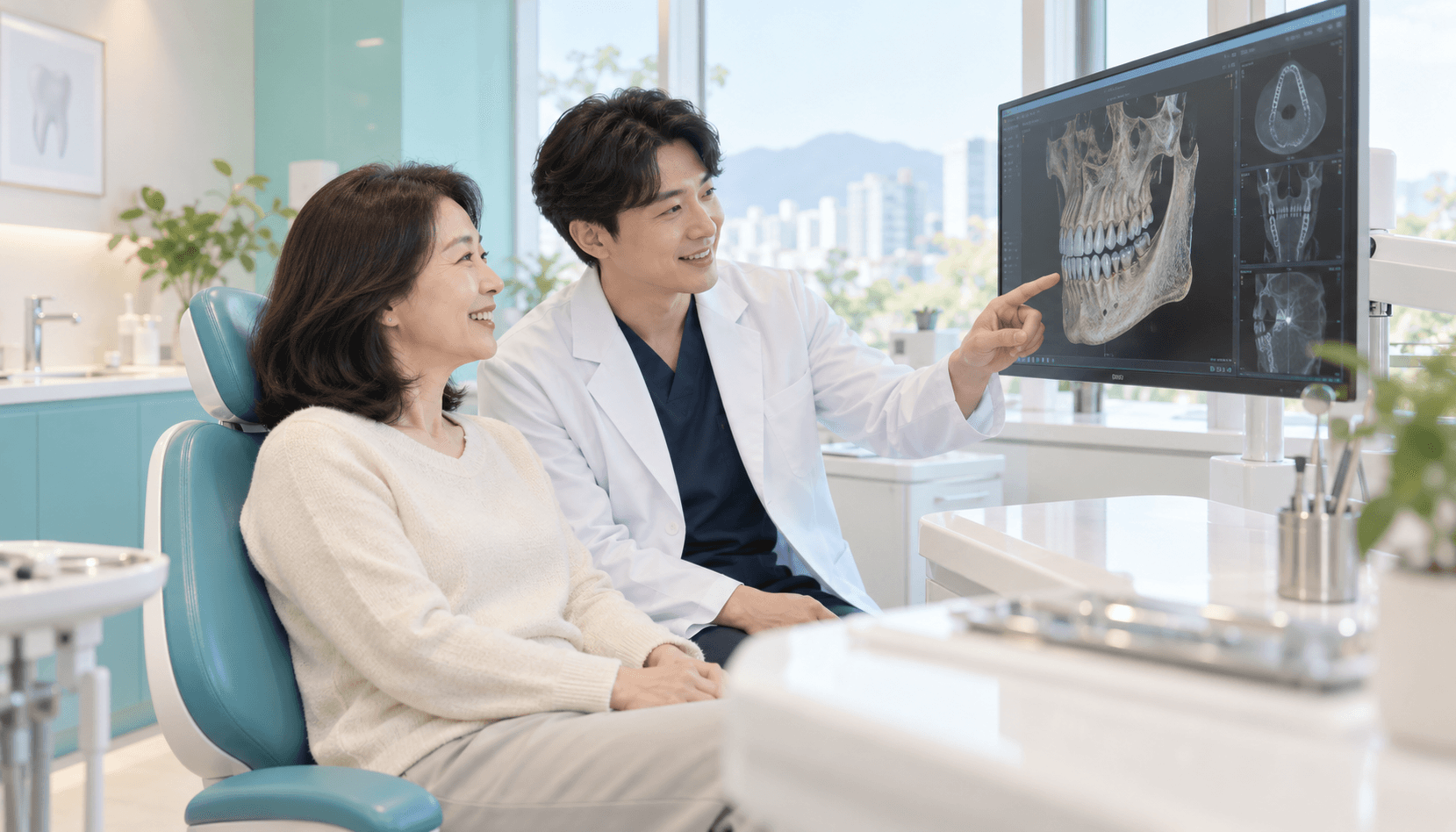
At Seoul Lab Dental: your estimate is confirmed in writing after a 3D scan and exam, before any treatment begins — and explained in English.
For foreign residents
If you're enrolled in NHIS (most residents with an ARC are), the covered portion applies to you the same as it does to locals. Private or expat dental insurance can offset non-covered treatment, so check your policy before a big procedure.
Frequently asked questions
Is dental treatment expensive in Korea?
It varies by procedure. Basic care is often partly covered by national insurance, while implants, orthodontics, and cosmetic work are usually private pay. A written estimate after an exam is the only reliable number.
Can I get a price before treatment?
Yes. At Seoul Lab Dental we give a written estimate after your 3D scan and exam, before anything begins — explained in English.
Does insurance lower the cost?
National insurance (NHIS) covers part of some basic treatments. Private or expat dental insurance may reimburse part of non-covered work — check your policy first.
Can I pay for dental treatment in instalments in Korea?
Often yes, especially for larger treatments like implants or orthodontics — many clinics let you spread the cost over the treatment period. Ask when you get your estimate. Clinics also accept cards.
Will I get a receipt to claim on my insurance?
Yes. Ask for an itemised receipt and a treatment detail statement — those are what private or expat dental insurers need. Keep them with your diagnosis to submit your claim.
Want a clear estimate for your treatment?
Book a 3D scan and consultation — you'll leave knowing your treatment plan and exact cost.
Get my estimate