Plenty of clinics in Seoul advertise English service — but there's a big difference between a receptionist who speaks some English and a dentist who explains your diagnosis, options, and costs in it. Here's how to tell them apart before you're in the chair.
Korea has excellent dentistry — one of the highest densities of dentists in the world, strong digital workflows, and fair prices. The hard part for foreigners usually isn't finding a dentist. It's finding one who can genuinely explain your treatment in English, put the cost in writing, and answer your questions before anything happens to your teeth.
"English OK" isn't always English care
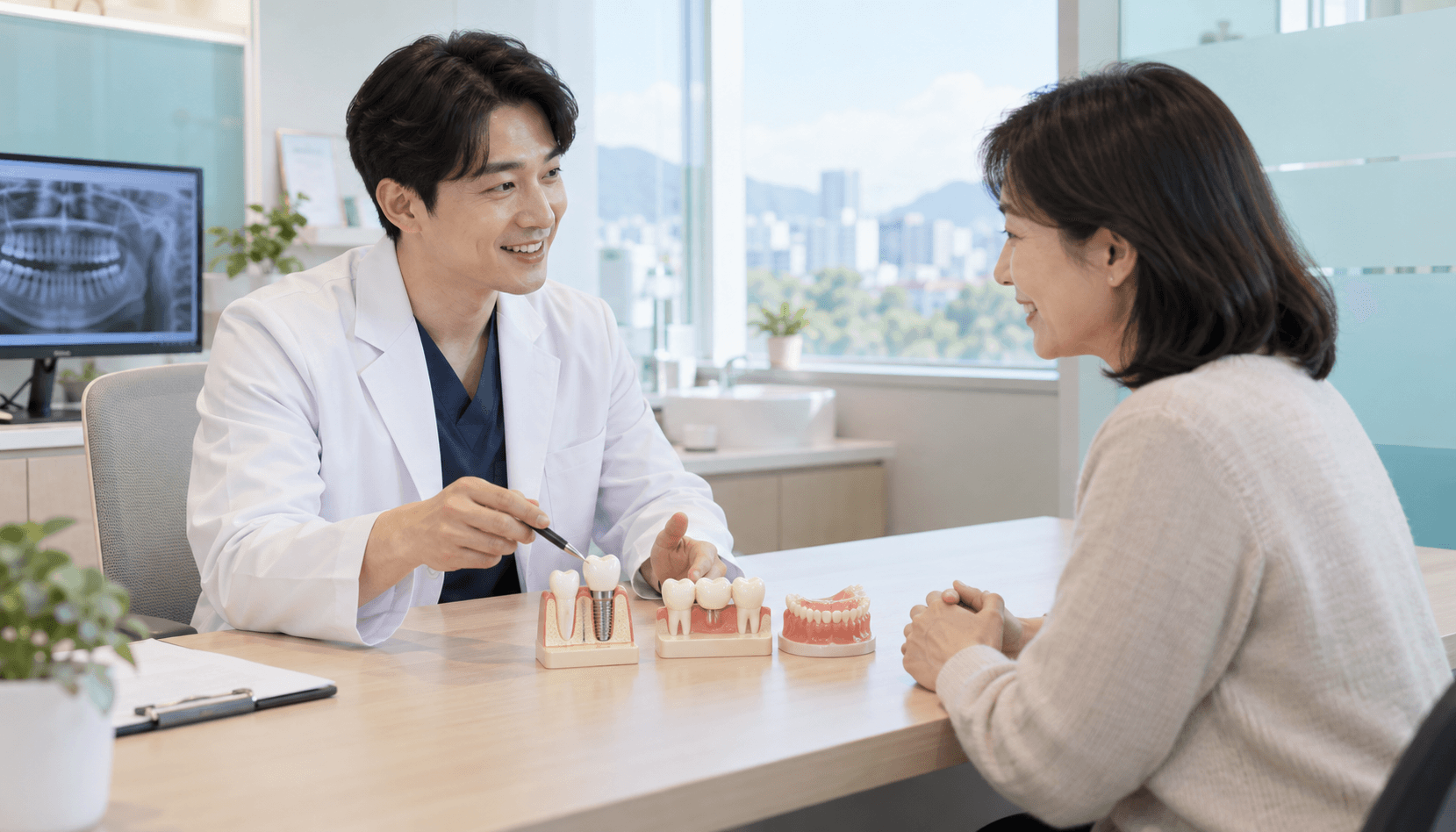
Many clinics can handle booking in English. Fewer can walk you through an X-ray, explain why a tooth needs a crown rather than a filling, or discuss what your insurance will and won't cover. What you actually need is chair-side English — the dentist or treatment coordinator explaining the diagnosis and plan, not just the front desk taking your name.
A quick test when you enquire: ask a real clinical question in English (for example, "If the cavity is deep, will I need a root canal, and what would that cost?"). The quality of the answer tells you what the visit will be like.
Where to actually look
- Google Maps reviews — read them for English. Don't just check the star rating. Search the reviews for words like "English", "explained", "estimate". Reviews from other foreigners describing an actual visit are worth more than any ad.
- Expat communities. Facebook groups and forums for foreigners in Korea are full of first-hand recommendations — and warnings.
- University hospital international clinics. Reliable English, but usually higher prices, referral paperwork, and longer waits — often more than you need for routine care like fillings, scaling, or even implants.
- Local clinics that publish in English. A clinic that writes real guides and prices in English is showing you, before you visit, how it communicates.
What to check before you book
- A written, itemised estimate before treatment starts — not a number spoken in the hallway.
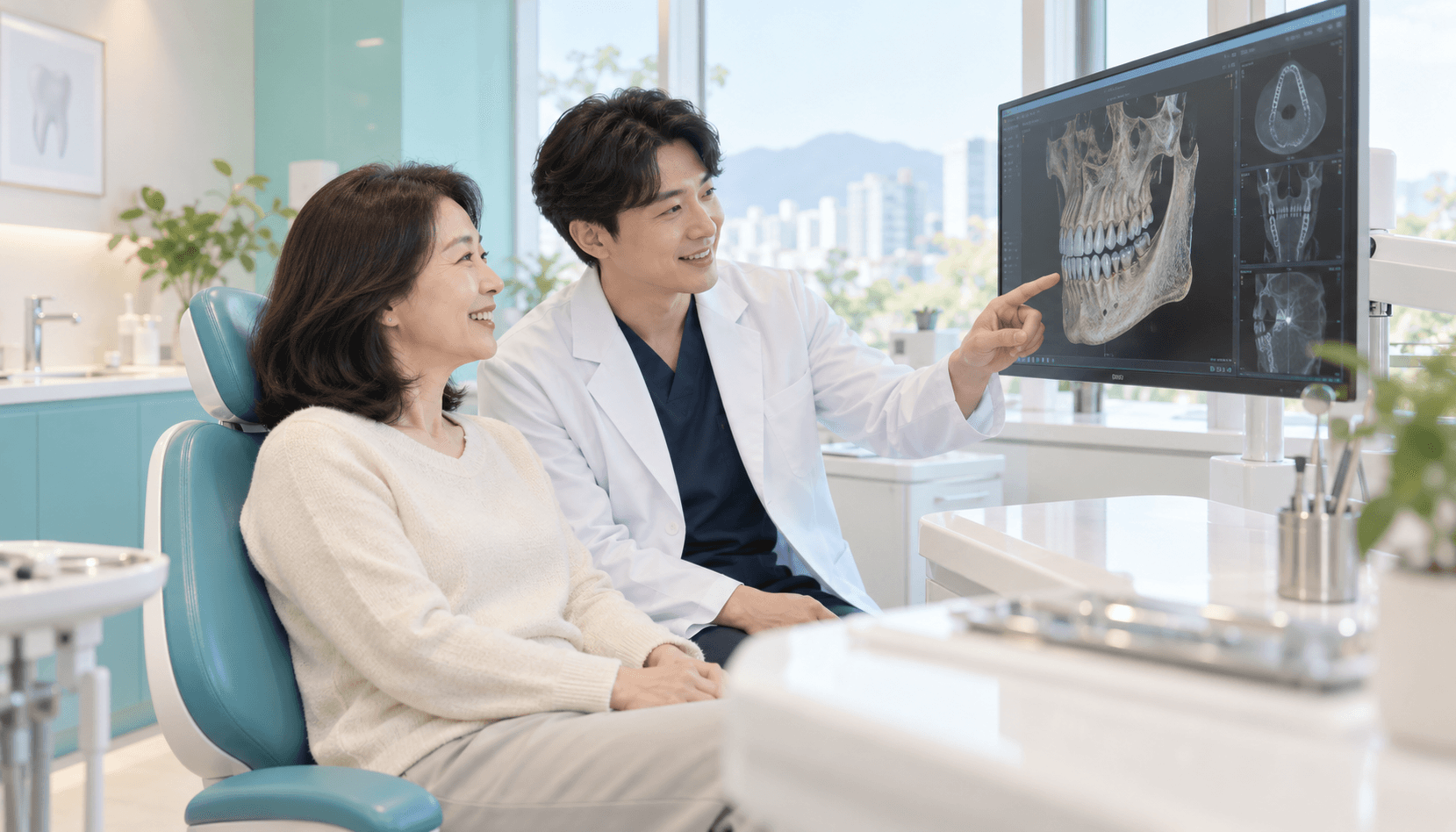
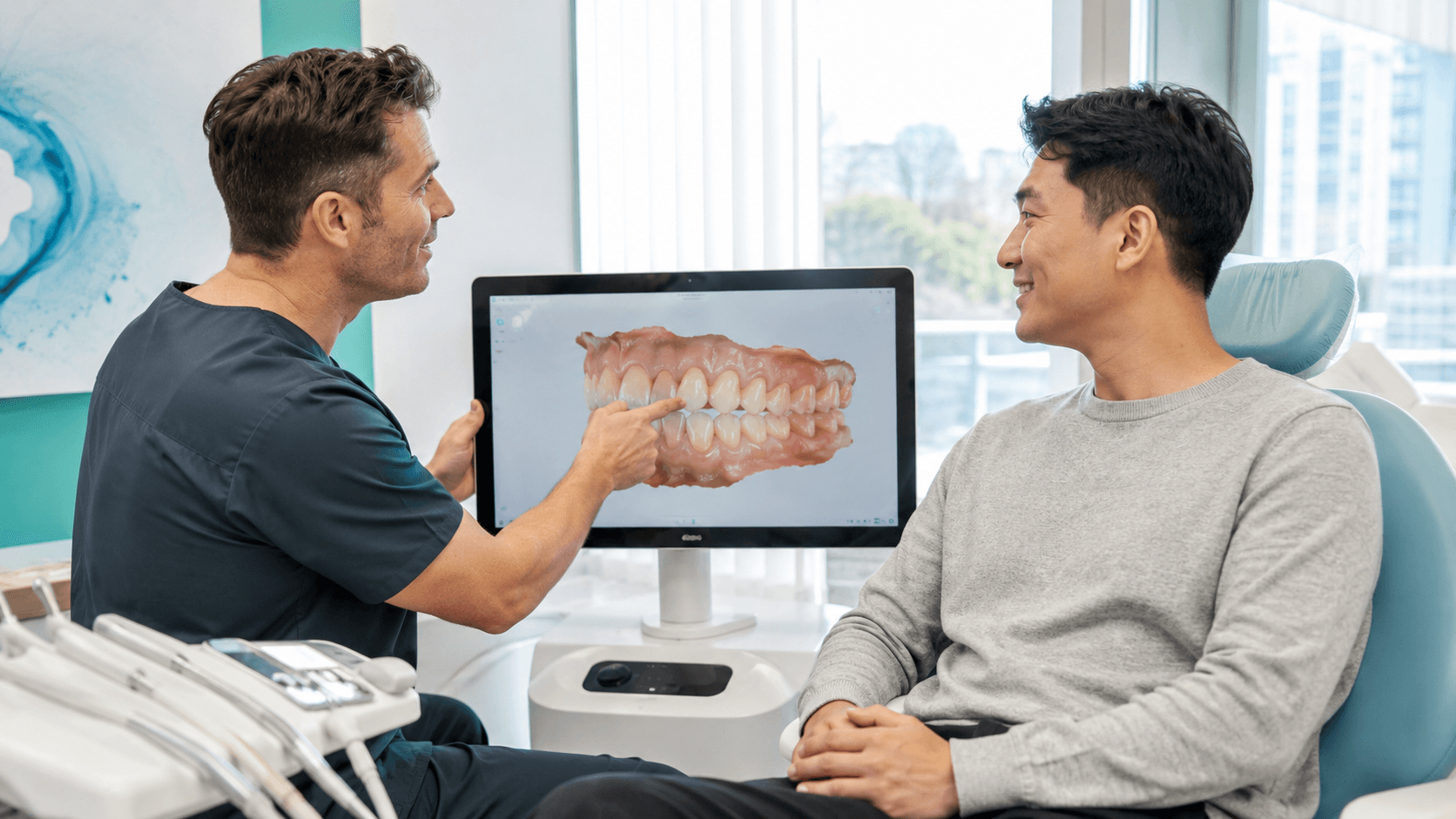
- A 3D scan or proper imaging as the basis of the diagnosis, which you can see and have explained.
- Specialist credentials you can verify — board certifications, where the dentists trained, whether that's published openly.
- English aftercare — written instructions you can actually follow at home, and a way to ask questions afterwards.
What to bring
- Your ARC (Alien Registration Card).
- Your NHIS card or status if you're enrolled — NHIS covers some routine dental care (like scaling once a year and some fillings), though most cosmetic and implant work is private pay.
- Any X-rays or records from a previous dentist, if you have them.
Living in northern Seoul or Gyeonggi? Look north, not just downtown
If you're in Nowon, Dobong, Gangbuk, or anywhere along the Line 1 corridor, the clinics of central Seoul aren't your only option — and often not the most convenient one. Uijeongbu, just north of the city, is a short ride on Line 1, and it's where we practice.
At Seoul Lab Dental: internationally trained, board-certified dentists explain your diagnosis, options, and exact cost in English — with a 3D scan and a written estimate before any treatment begins. We're one station ride from northern Seoul on Line 1.
Frequently asked questions
Do dentists in Seoul speak English?
Many can handle basic communication, but the level varies a lot. The clinics to look for are the ones where the dentist or a treatment coordinator explains your diagnosis, treatment options, and costs in English — not just the front desk. Asking a real clinical question by message before booking is a quick way to check.
Are international clinics in Seoul more expensive?
University hospital international clinics usually cost more and involve more paperwork and waiting. For routine care — checkups, fillings, scaling, and even implants — a local clinic with genuine English service typically offers the same quality with simpler logistics and clearer prices.
What should I bring to a Korean dental clinic?
Bring your ARC (Alien Registration Card), your NHIS card or enrolment status if you have one, and any previous dental records or X-rays. NHIS covers some routine care such as annual scaling; cosmetic work and most implants are private pay.
How do I know if a clinic is good, not just English-friendly?
Look for verifiable credentials (board certifications, where the dentists trained), a 3D scan or proper imaging behind the diagnosis, and a written itemised estimate before treatment. Reviews from other foreigners that describe actual treatment — not just friendliness — are the strongest signal.
I live in northern Seoul — do I have to go downtown for an English-speaking dentist?
No. If you're along Line 1 or 7 — Nowon, Dobong, Gangbuk, or northern Gyeonggi — Uijeongbu is often faster to reach than Gangnam. Seoul Lab Dental treats international patients in English with a 3D scan and written estimates, one stop north of the city.
Want a clear estimate for your treatment?
Book a 3D scan and consultation — you'll leave knowing your treatment plan and exact cost.
Get my estimate