"How much is a dental implant in Korea?" has no single answer — but the price follows a clear logic. Here's what goes into it, what NHIS does and doesn't cover, and how to get a straight, itemised estimate — in English.
There's no single price for a dental implant in Korea. The cost depends on your jaw, the materials, and how many teeth you're replacing — so a trustworthy number only comes after an exam and 3D scan. What you can do beforehand is understand what actually goes into the price, so an estimate makes sense and you can compare clinics fairly.
What you're actually paying for
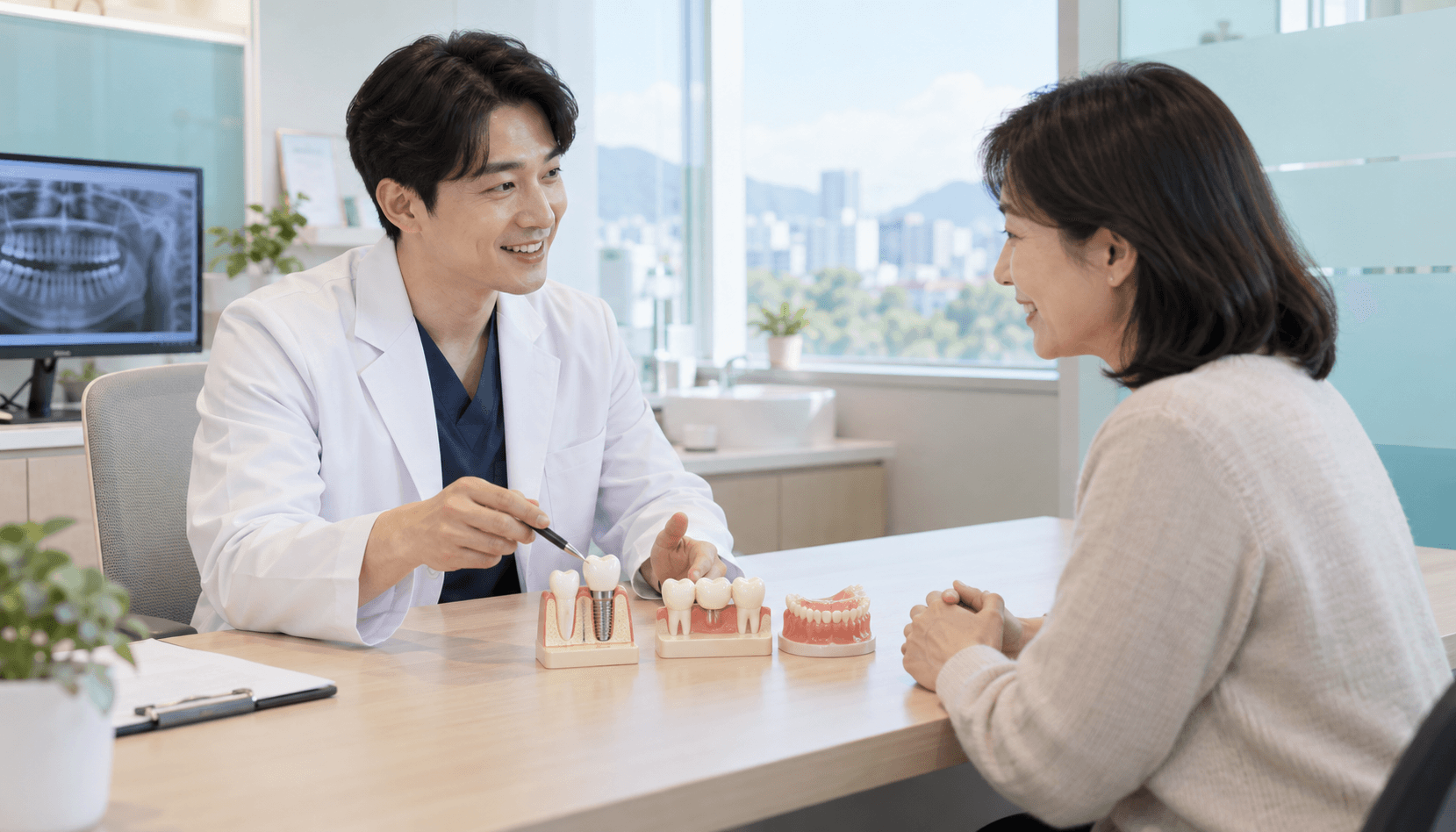
A single implant is really three parts, and a good estimate lists them separately:
- The fixture — the titanium screw placed in the jawbone.
- The abutment — the connector that sits on the fixture.
- The crown — the visible tooth that goes on top.
If your jaw needs more support, two add-ons can change the total:
- Bone graft — rebuilds bone so the implant has something to hold onto.
- Sinus lift — creates room for implants in the upper back jaw.
When you get an estimate, ask for it itemised — fixture, abutment, crown, and any grafting on separate lines — so you can see what each part costs.
What makes one implant cost more than another
- How many implants you need. One tooth is very different from a full arch (for example, an "All-on-4" that supports a full set on four implants).
- The implant brand. Korea is one of the world's biggest implant manufacturers, so reliable domestic systems (such as Osstem or Dentium) are widely used and usually more economical than imported premium brands (such as Straumann or Nobel Biocare). Both can be excellent — the right choice depends on your case, not just the label.
- Your bone. If you need a bone graft or sinus lift, that adds to the cost.
- The crown material. A zirconia crown and a metal-ceramic (PFM) crown aren't priced the same.
- Extra steps. An extraction, or a temporary tooth while you heal, can add line items.
Does insurance help with implants?
- NHIS (national health insurance). Korea's national insurance covers implants only in limited cases — mainly for patients aged 65 and over, and only up to two implants, with the patient paying a share of the cost (around 30%). It doesn't cover implants for most younger adults. Eligibility and rates are set by NHIS, so confirm the current terms.
- Private or expat dental insurance. Your own policy may reimburse part of the cost. Ask for an itemised receipt and check what your plan covers before treatment.
Why implants in Korea are often more affordable
Korea has one of the highest densities of dentists in the world, a strong digital-dentistry workflow (3D scans, guided placement, in-house labs), and a large domestic implant industry. For foreign residents, that usually means well-planned treatment at a price that compares favourably with North America or Europe — without traveling for it.
Is more affordable the same as lower quality?
Short answer: no. Korea's lower prices come from scale and a strong domestic industry, not from cutting corners.
- The same brands you'd expect. Korean clinics use both world-leading domestic systems (Osstem and Dentium are among the largest implant makers globally) and imported premium brands (Straumann, Nobel Biocare). You're choosing from the same implants used worldwide.
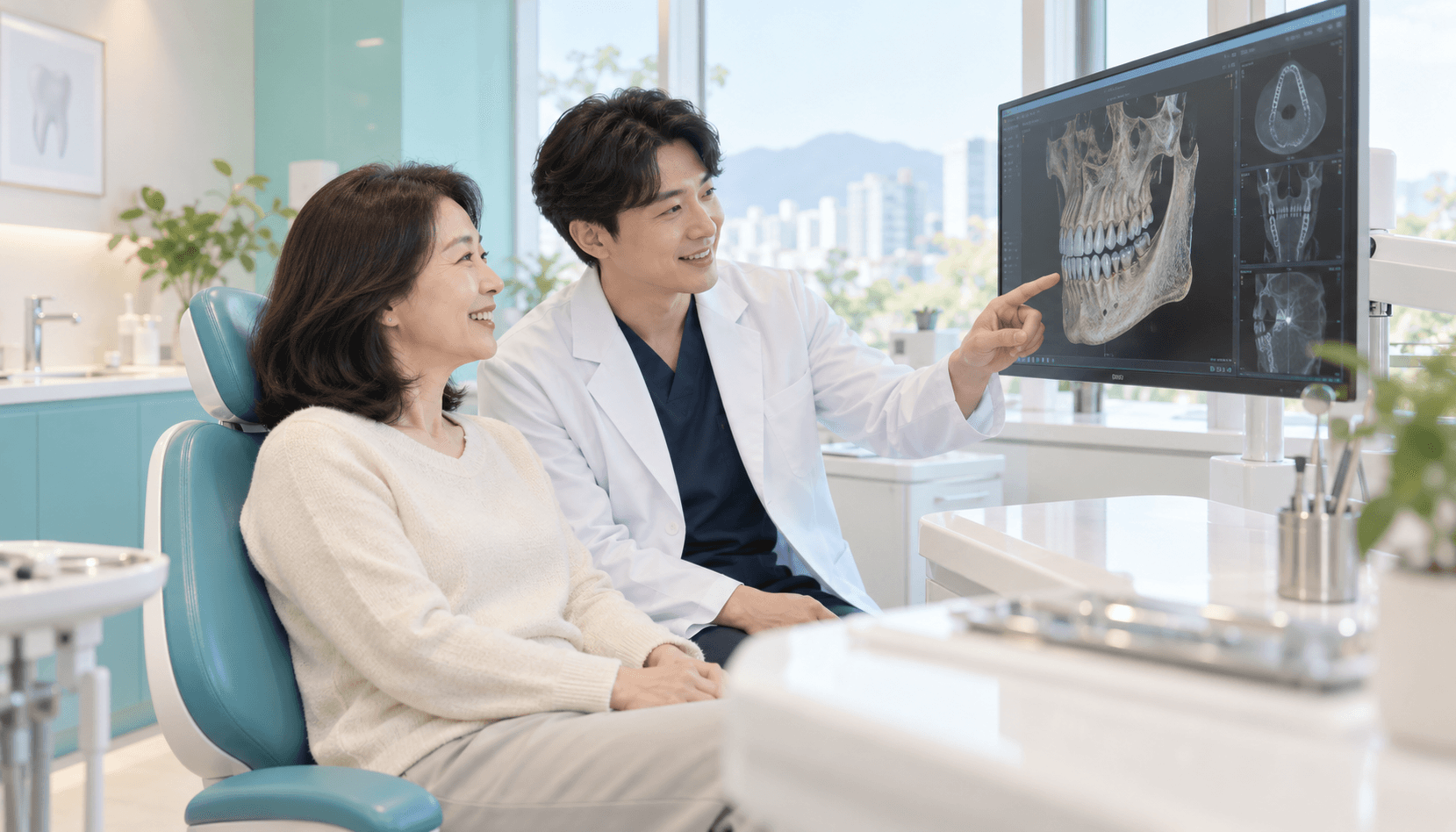
- Digital, guided placement. A 3D scan and computer-guided planning let the dentist place the implant precisely, which lowers risk and improves the fit of the final crown.
- Specialist-led care. Ask who is placing the implant and what training they have. At Seoul Lab Dental, implant planning is led by dentists with implant and prosthodontic training.
- Follow-up matters. Good implant care includes checkups during healing and a clear answer on what happens if something needs adjusting later. Ask whether follow-up and any warranty are included before you start.
If a quote looks unusually low, ask what it leaves out — the brand, the abutment, the crown, or the follow-up. A fair price is a complete, itemised one, not just a small number.
How to compare quotes — and why they differ
Two clinics can quote very different numbers for "the same" implant, and it's usually not random. Before you compare, line up these five things:
- What's included. Is the price for the fixture only, or the fixture + abutment + crown together? A low number often means the crown or abutment is billed separately.
- The implant brand. A domestic system (Osstem, Dentium) and an imported premium one (Straumann, Nobel Biocare) are genuinely different prices — make sure you're comparing the same tier.
- The crown material. A zirconia crown and a metal-ceramic (PFM) crown aren't priced the same.
- Extra procedures. A bone graft, sinus lift, or extraction changes the total — check whether the quote assumes you need them.
- Follow-up and warranty. Are the healing-period checkups and any guarantee included, or added later?
How the total scales, roughly: a single implant costs the least, several more, and a full-arch solution (like All-on-4) the most — so compare like with like, not one tooth against a full arch.
The takeaway for "how much does it cost": there's no single going rate, because all of these move the number. The only figure that means anything is an itemised written estimate for your mouth — and once it's itemised, you can compare clinics fairly and spot what a suspiciously low number leaves out.
Getting a straight answer on cost
The honest answer to "how much is an implant?" is: it depends — but a good clinic will make the number concrete for you. After a 3D scan, ask for a written, itemised estimate, check exactly what it includes (fixture, abutment, crown, grafting, follow-ups), and ask whether the implant carries any warranty. Many clinics also let you pay in instalments.
At Seoul Lab Dental: every implant plan starts with a 3D scan and a written estimate that itemises each part in English — so you know the full cost, and what it covers, before anything begins.
Frequently asked questions
Why is there no fixed price for a dental implant in Korea?
Because the cost depends on how many implants you need, the brand and crown material, and whether your jaw needs a bone graft or sinus lift. A reliable figure only comes after an exam and 3D scan — which is why a good clinic gives you a written, itemised estimate rather than a number over the phone.
Does Korean national insurance (NHIS) cover implants?
Only in limited cases — mainly for patients aged 65 and over, up to two implants, with the patient paying a share (around 30%). Most younger adults pay privately. Confirm current eligibility with the clinic or NHIS.
Are Korean-made implants cheaper than imported ones?
Often, yes. Korea is a major implant manufacturer, so trusted domestic systems like Osstem or Dentium are widely used and usually cost less than imported premium brands. Both can give excellent results; the best choice depends on your case.
Can my expat or travel insurance reimburse implant costs?
It may. Check your policy for dental coverage, and ask the clinic for an itemised receipt you can submit. We explain everything in English so your paperwork is clear.
Are dental implants in Korea good quality and safe?
Yes. Korean clinics use the same global implant brands (including world-leading domestic systems like Osstem and Dentium), with 3D-guided placement that improves precision and safety. Lower prices come from scale, not cut corners. Check that your quote is itemised and that follow-up care is included, and ask about the dentist's implant training.
Why do implant prices vary so much in Korea?
Because quotes cover different things: the fixture only vs the fixture + abutment + crown, a domestic brand vs an imported premium one, the crown material, and whether a bone graft or follow-up is included. To compare fairly, ask each clinic for an itemised written estimate and line up the same items.
Want a clear estimate for your treatment?
Book a 3D scan and consultation — you'll leave knowing your treatment plan and exact cost.
Get my estimate