A root canal has a scary reputation it doesn't really deserve. It's the treatment that saves a badly infected tooth — and with modern techniques it's usually no worse than a filling. Here's what to expect, in English.
"Root canal" makes people wince, but the procedure is what saves a tooth that would otherwise have to come out. When the soft tissue inside a tooth (the pulp) becomes infected or inflamed, a root canal removes it, cleans the space, and seals it — so you keep your natural tooth.
What's actually happening inside the tooth
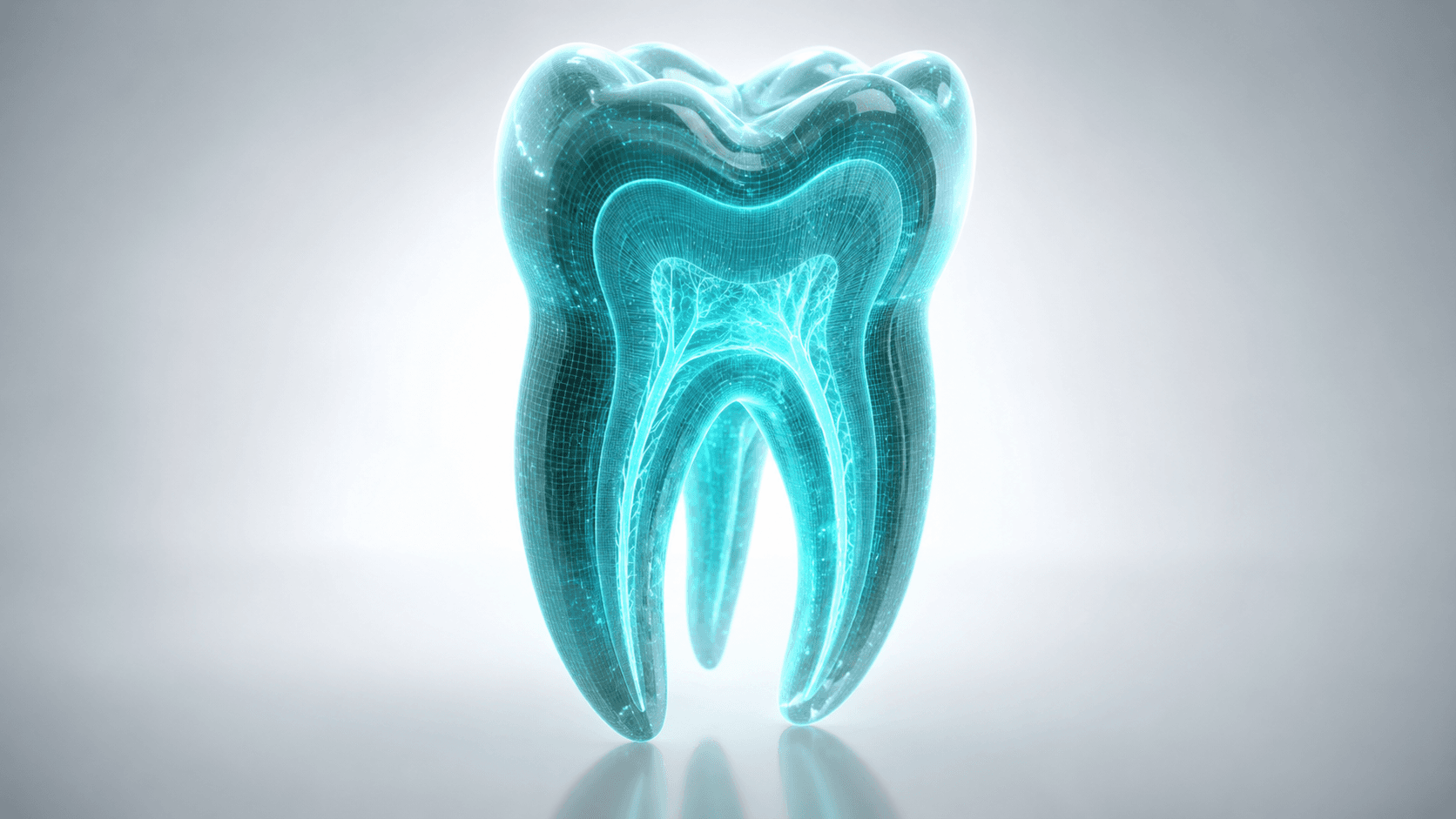
Every tooth has a hollow space running from the crown down through each root. Inside it sits the pulp: nerve, blood vessels, and connective tissue. It's what makes a tooth feel hot and cold.
When bacteria reach the pulp — through deep cavities, a crack, a leaking old filling, or an injury — the tissue becomes inflamed and then infected. Bone doesn't have room to swell inside a sealed tooth, which is why the pressure hurts so specifically. Left alone, the infection drains out through the tip of the root and into the bone around it, which is the point at which an abscess forms.
A root canal removes that tissue and seals the space so bacteria have nowhere to live. The tooth stays; only the pulp goes.
Signs you might need one
- Lingering pain, especially to hot or cold
- Pain when biting or pressing on a tooth
- Swelling or a pimple-like spot on the gum
- A tooth that has darkened
Sometimes there's no pain at all and it's found on an X-ray. A proper diagnosis is essential — that's where imaging and an exam come in.
How it's diagnosed
Symptoms alone don't locate the problem. Pain refers along the jaw, so the tooth that hurts isn't reliably the tooth that's infected, and a tooth whose nerve has already died can stop hurting entirely while the infection continues underneath.
So a diagnosis usually combines:
- An X-ray or 3D CT, to see the roots, the canals, and any darkening at the root tip that shows infection has reached the bone.
- Pulp testing — cold or a small electric test — to find out whether the nerve is alive, inflamed, or dead.
- Biting and percussion tests, to tell a cracked tooth from an infected one, since they can feel similar.
This is also the stage where you find out whether a root canal is needed at all. A deeply sensitive tooth is sometimes just a deep cavity that can be filled.
What the treatment involves
- The tooth is numbed with local anaesthetic — you shouldn't feel pain during treatment.
- The infected pulp is removed and the inside of the tooth is cleaned and shaped.
- The space is sealed.
- Because a treated tooth can become brittle, it's often protected afterward with a crown.
It may take one or more visits depending on the tooth.
How many visits, and why it varies
There's no single answer, and the honest version is worth understanding before you book time off work:
| What affects it | Why |
|---|---|
| Which tooth | A front tooth usually has one canal. A back molar can have three or four, sometimes with an extra one that's hard to find. |
| How much infection there is | A tooth with an abscess may need the inside dressed with medication and left to settle before it's sealed. |
| Root shape | Curved or narrow canals take longer to clean properly. |
| Whether it's a retreatment | Removing old filling material before starting again adds a step. |
What you should get at the first visit is an estimate of the number of appointments — ask for it.
Does it hurt?
Modern root canal treatment is done under anaesthetic and is usually about as comfortable as a filling. Any tenderness afterward settles in a few days.
If the tooth is badly inflamed, anaesthetic can take longer to work — say so rather than enduring it, because there are ways around it. Afterward, it's normal for the tooth to feel bruised when you bite for a few days. Pain that gets worse rather than better after the first few days is worth a call.
Why the crown afterward isn't optional
This is the part that gets skipped, and it's the most common reason a successfully treated tooth is lost anyway.
A tooth that's had its nerve removed loses its internal blood supply, and the access hole made to reach the canals removes structure from the middle of the tooth. Back teeth take heavy chewing load, and a hollowed-out molar can split vertically — a crack that usually can't be repaired. Covering the tooth spreads that load.
Front teeth take less force and can sometimes be restored with a filling instead. Your dentist should tell you which case yours is at the start, so the crown is in the plan and in the estimate rather than a surprise at the end.
Retreatment: when a root canal needs doing again
Root canals have a high success rate, but not a perfect one. A treated tooth can flare up months or years later if bacteria survived in a canal that wasn't found, if the seal leaked, or if a new cavity formed at the edge of the restoration.
Retreatment means reopening the tooth, removing the old filling material, cleaning the canals again and resealing. It's more demanding than a first-time root canal, which is one reason it's usually handled by a specialist. Where retreatment isn't practical, a small surgical procedure at the root tip, or removal and replacement with an implant, are the alternatives — and a good clinic will lay out all three rather than only the one it prefers.
At Seoul Lab Dental: root canal treatment is carried out by Dr. Choi Mal-bong, a specialist in endodontics trained at Columbia University, licensed in both Korea and the United States, and formerly a clinical professor there. Complex and retreatment cases are handled by someone who does this specific work — and every step is explained to you in English.
Cost and insurance
Root canal treatment is often partly covered by NHIS, so the covered portion applies as it does for locals; you pay a co-payment. A crown placed afterward may be separate. We put the full plan and cost in writing after your exam.
Two things make quotes differ between clinics, and neither is about quality: whether the crown is included in the figure you were given, and how many canals the tooth has. Ask for both in writing. Our guide to dental costs in Korea explains how to read an estimate.
Questions worth asking before you agree
- Is a root canal definitely needed, or could this be treated with a filling?
- How many canals does this tooth have, and how many visits should it take?
- Will I need a crown afterward, and is it in this estimate?
- What's covered by NHIS here and what isn't?
- If this doesn't work, what are the options?
Why save the tooth?
Keeping your own tooth is almost always better than losing it — it preserves your bite and avoids the need for an implant or bridge later. A root canal is how that's done.
Nothing replaces a natural tooth exactly. An implant is the closest thing, and it's a bigger, longer and more expensive undertaking than treating the tooth you already have. That's the comparison worth keeping in mind when a root canal sounds daunting.
Frequently asked questions
Is a root canal painful?
It's done under local anaesthetic, so you shouldn't feel pain during treatment — it's usually about as comfortable as a filling. Mild tenderness for a few days afterward is normal. Pain that increases after the first few days is worth calling about.
How do I know if I need a root canal?
Common signs are lingering pain to hot or cold, pain when biting, gum swelling, or a darkened tooth. Sometimes there are no symptoms and it's found on an X-ray. An exam with imaging and a pulp test confirms it — symptoms alone don't, because pain refers along the jaw.
How many visits does a root canal take?
It depends on the tooth and how much infection there is. A front tooth with one canal is simpler than a molar with three or four, and a tooth with an abscess may need medication inside it before it's sealed. Ask for an expected number of appointments at the first visit.
Do I really need a crown after a root canal?
Usually yes, for back teeth. A tooth without its nerve is more brittle and the access hole removes structure from the middle, so a molar can split under normal chewing. Front teeth can sometimes be restored with a filling. Your dentist should tell you which applies — and include it in the estimate from the start.
Is root canal treatment covered by insurance in Korea?
Root canal treatment is often partly covered by NHIS, so you pay a co-payment on the covered portion. A crown placed afterward may be separate. We confirm the full cost in writing after your exam.
Do you have an endodontics specialist?
Yes. Dr. Choi Mal-bong is a specialist in endodontics trained at Columbia University, licensed in both Korea and the United States and formerly a clinical professor there — so complex and retreatment cases are handled by someone who does this specific work, explained to you in English.
Want a clear estimate for your treatment?
Book a 3D scan and consultation — you'll leave knowing your treatment plan and exact cost.
Get my estimate