Dental treatment in Korea often costs less than people expect coming from elsewhere, and the natural next question is whether something is being given up to get there. Usually not — but the reasons are worth understanding, because they also tell you when a low quote is a genuine warning sign.
If you've compared prices before coming to Korea, or compared clinics once you arrived, the range can be confusing. The same treatment name comes back at very different numbers, and the cheapest quote is rarely the one you should take. Here's what's actually behind the price, in English for foreign residents.
Where the lower price comes from
Several things stack up, and none of them are about cutting corners:
- A national fee schedule. For treatment that NHIS covers — exams, fillings, extractions, root canal treatment, scaling — the fee is set nationally, not by each clinic. Clinics don't compete on those prices because they can't.
- Density and competition. Korea has a lot of dental clinics in a small area, and patients switch easily. That pressure lands on the treatments that aren't price-controlled.
- Domestic manufacturing. Implant fixtures and much of the lab work are made in Korea rather than imported, which removes a layer of cost that many countries carry.
- Short supply chains. Dental labs are often nearby, sometimes in the same district, so turnaround and shipping cost less.
- Less administrative overhead. Billing runs through one national system rather than many private insurers, so clinics carry smaller back-office costs.
Notice what isn't on that list: training, materials, or standards. Korean dentists complete a long degree and a national licensing exam, and specialists complete further board certification on top of it.
What the lower price does not tell you
It doesn't tell you the clinic is good, and it doesn't tell you the clinic is bad. Price in Korea mostly reflects the structure above, which is the same for everyone — so it can't be the thing that separates one clinic from another.
What separates them is what you can actually check: who does the treatment, whether you're shown your own images, whether the estimate is itemised, and what happens after the work is finished.
Five things that make one quote cheaper than another
When two quotes for "the same" treatment differ, it's almost always one of these — and the first four mean the quotes aren't comparable:
| What differs | What to ask |
|---|---|
| Scope | Does the implant price include the crown, or only the post in the bone? |
| Extra steps | Is a bone graft, sinus lift, or extraction included, or billed separately? |
| Materials | Which implant brand, which crown material? Zirconia and metal-ceramic are not the same price. |
| Follow-up | Are the adjustment visits and final checks in the figure? |
| Genuine discounting | Some clinics do run lower margins. That's legitimate — it's the only one of the five where cheaper actually means cheaper. |
A quote missing the first four isn't a bargain; it's an incomplete document. Our guide to dental costs in Korea walks through how to read an estimate line by line.
When a low price is a real warning
Not often — but these are the patterns worth stepping back from:
- A price quoted before any imaging, for treatment that depends on what the imaging shows.
- An estimate that won't be itemised when you ask.
- A single number for a complex plan, with the detail promised "later".
- Pressure to decide today, or a price that expires if you leave to think.
- No clear answer about who will do the treatment, or what happens if something needs redoing.
None of these are about the number being low. They're about the number not being explainable.
How to judge a clinic without being a dentist
You can't assess clinical skill from the outside, but you can assess process — and process is a reasonable proxy:
- Do they image before planning? For implants that means a 3D CT, not only a flat X-ray.
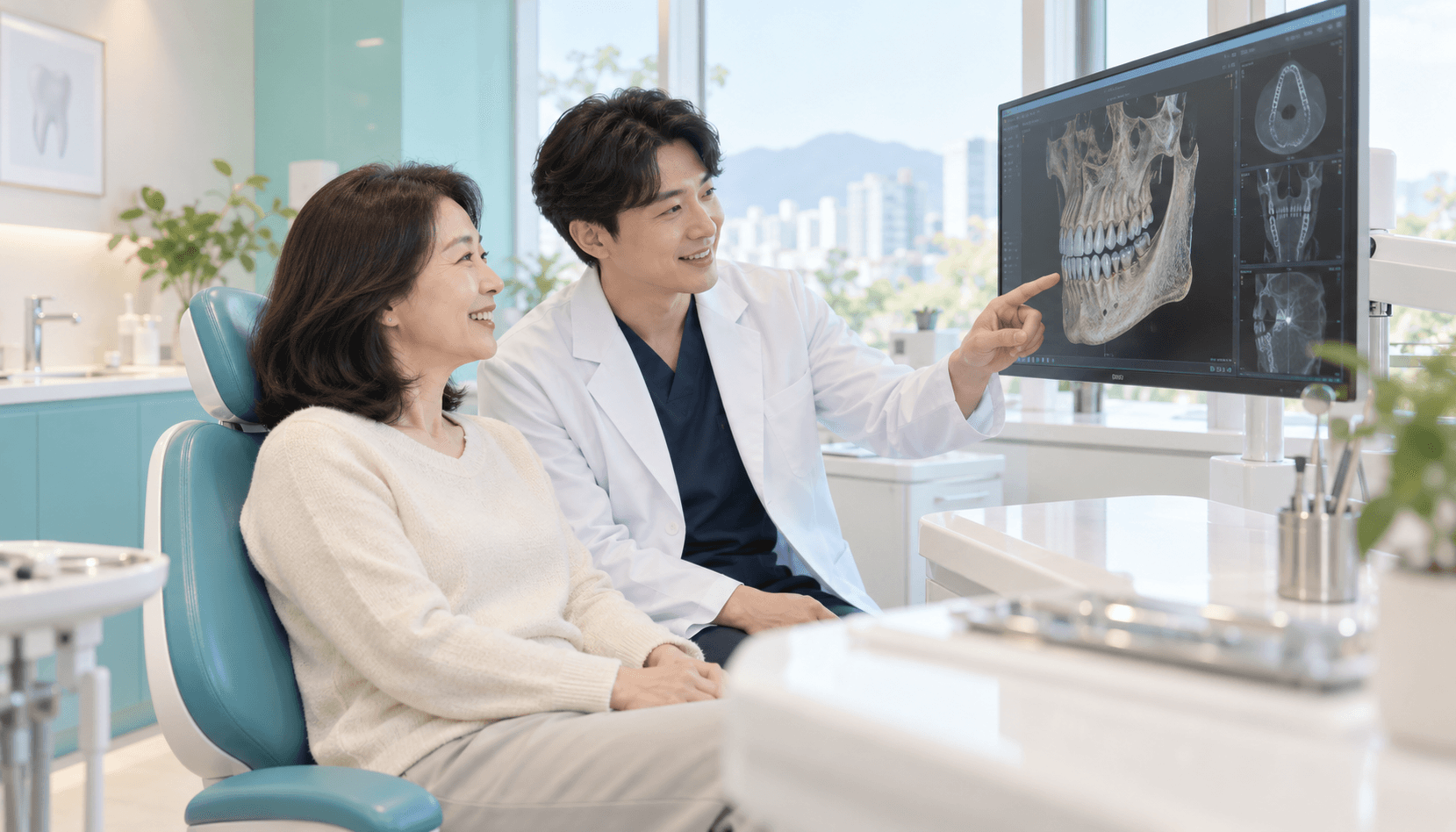
- Do they show you your own scan and explain what they're seeing?
- Do they name alternatives, including cheaper ones and doing nothing for now?
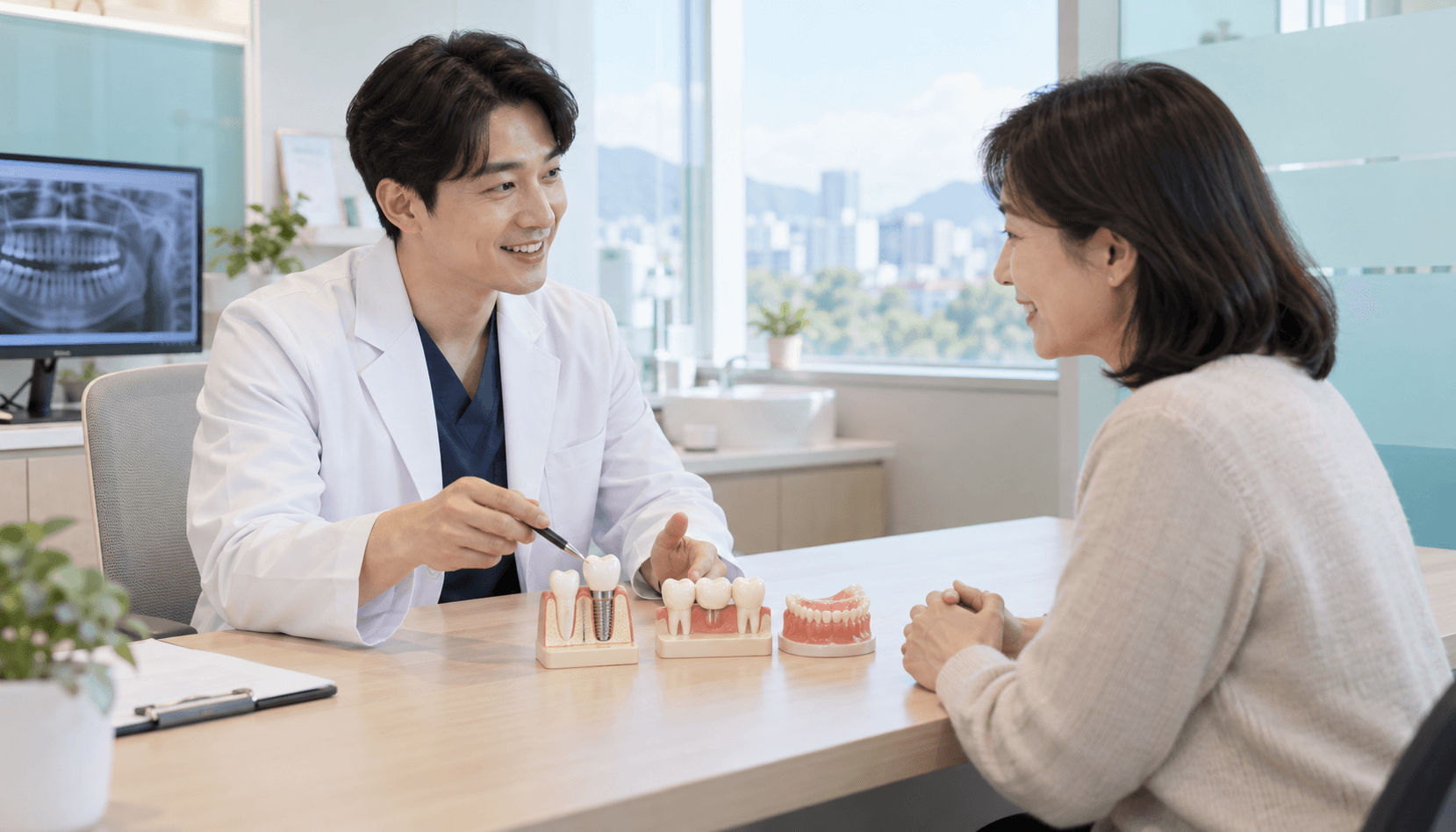
- Is the estimate in writing, itemised, before anything starts?
- Who is treating you — and for complex work, is that person a specialist in it?
- What does aftercare look like, and what happens if a problem appears in a year?
A clinic confident in its recommendation has no trouble answering all six.
If you're considering travelling to Korea for treatment
This page is written for people living here, and the honest version for anyone flying in is different in one important way: the follow-up is the hard part.
Implants and orthodontics aren't single appointments. Implants need healing time between placement and the crown; orthodontics runs over many visits, then retention after that. If something needs adjusting after you fly home, the clinic that did the work isn't reachable, and a local clinic has to take over someone else's plan — which most are reluctant to do.
That doesn't make dental travel unreasonable, but it does mean the comparison isn't just price against price. Ask how many visits your plan needs, how far apart they fall, and what the arrangement is if something needs attention after you leave. If a clinic answers that vaguely, the saving isn't a saving.
At Seoul Lab Dental: we scan first, show you the images, lay out the options that genuinely apply — including the cheaper ones — and give you an itemised written estimate before anything begins. All explained in English.
The part that doesn't change with price
Whatever you pay, the treatments that hold up are the ones that were planned properly and maintained afterwards. A cheap implant placed without a CT and an expensive one placed without a CT fail for the same reason. Spend the attention on the planning and the follow-up, and the price becomes the smaller question.
Frequently asked questions
Why is dental treatment cheaper in Korea?
Mostly structural: NHIS sets the fee for covered treatment nationally, there's dense competition among clinics, implant fixtures and lab work are largely made domestically, labs are nearby, and billing runs through one system rather than many insurers. None of it involves lower training or standards.
Does a cheaper price mean lower quality?
Not by itself. The cost structure is the same for every clinic in Korea, so price can't be what separates them. What separates them is who treats you, whether you're shown your own imaging, whether the estimate is itemised, and what aftercare looks like.
Why do two clinics quote such different prices for the same treatment?
Usually because the quotes cover different things — whether the crown is included, whether a bone graft or extraction is in the figure, which materials are used, and whether follow-up visits are counted. Ask for both to be itemised and compare line by line.
When should a low price worry me?
When it can't be explained: a price given before imaging for treatment that depends on imaging, an estimate that won't be itemised, a single number for a complex plan, pressure to decide the same day, or no clear answer about who will do the work.
Is it worth travelling to Korea just for dental treatment?
It depends on the treatment, and the difficulty isn't the price — it's follow-up. Implants and orthodontics run over months and multiple visits, and if something needs adjusting after you fly home, the clinic that did the work can't help. Ask how many visits are needed and what happens afterwards before comparing prices.
Can I get all of this explained in English?
Yes. At Seoul Lab Dental your diagnosis, the options, the materials and the itemised cost are explained in English, and you get the estimate in writing before treatment begins.
Want a clear estimate for your treatment?
Book a 3D scan and consultation — you'll leave knowing your treatment plan and exact cost.
Get my estimate