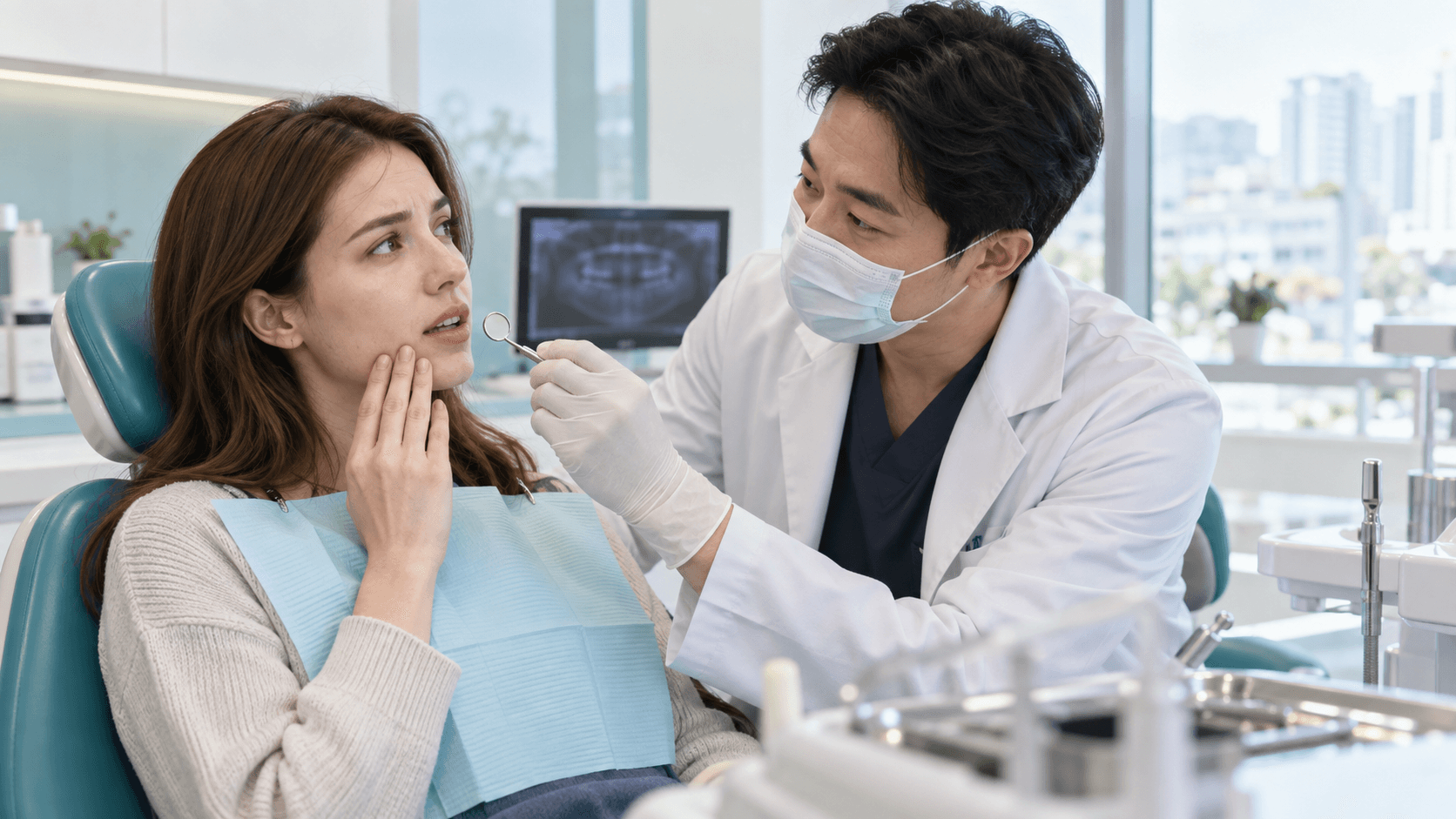
Gum disease is one of the most common dental problems — and one of the most preventable. If your gums bleed when you brush, that's a signal worth acting on. Here's how gum disease works and how it's treated in Korea.
Gum disease is one of the most common dental problems — and one of the most preventable. If your gums bleed when you brush, that's a signal worth acting on. Here's how gum disease works and how it's treated in Korea.
What is gum disease?
Gum disease starts as gingivitis — inflammation from plaque and tartar building up along the gum line. Left untreated, it can progress to periodontitis, which damages the bone that holds your teeth in place.
Warning signs
- Gums that bleed when you brush or floss
- Red, swollen, or tender gums
- Persistent bad breath
- Gums pulling away from teeth, or teeth feeling loose (later stages)
The good news: early stages are reversible
Gingivitis usually reverses with a professional cleaning and better home care. The earlier you treat it, the simpler it is.
How it's treated
- Scaling to remove plaque and tartar above the gum line.
- Deep cleaning (root planing) below the gum line for more advanced cases.
- Ongoing maintenance cleanings and good home care.
What NHIS covers
National insurance covers part of periodontal (gum) treatment, including scaling — so treating gum disease is usually a co-payment rather than full price. Your covered yearly scaling also helps prevent it.
At Seoul Lab Dental: we check your gums at every visit, explain what we find in English, and give a written plan if treatment is needed.
Preventing it
- Brush twice a day, and floss or use an interdental brush daily.
- Don't skip your regular checkups and cleanings.
Frequently asked questions
Are bleeding gums normal?
No. Bleeding when you brush or floss is usually the first sign of gum inflammation (gum disease). It's treatable, and the earlier you're seen, the simpler it is.
Can gum disease be cured?
Early gum disease (gingivitis) usually reverses with a professional cleaning and good home care. Advanced disease (periodontitis) can be controlled, but lost bone doesn't grow back — so treating it early matters.
Is gum treatment covered by insurance in Korea?
NHIS covers part of periodontal treatment, including scaling, so it's usually a co-payment rather than full price. We confirm the cost in writing after your exam.
Want a clear estimate for your treatment?
Book a 3D scan and consultation — you'll leave knowing your treatment plan and exact cost.
Get my estimate