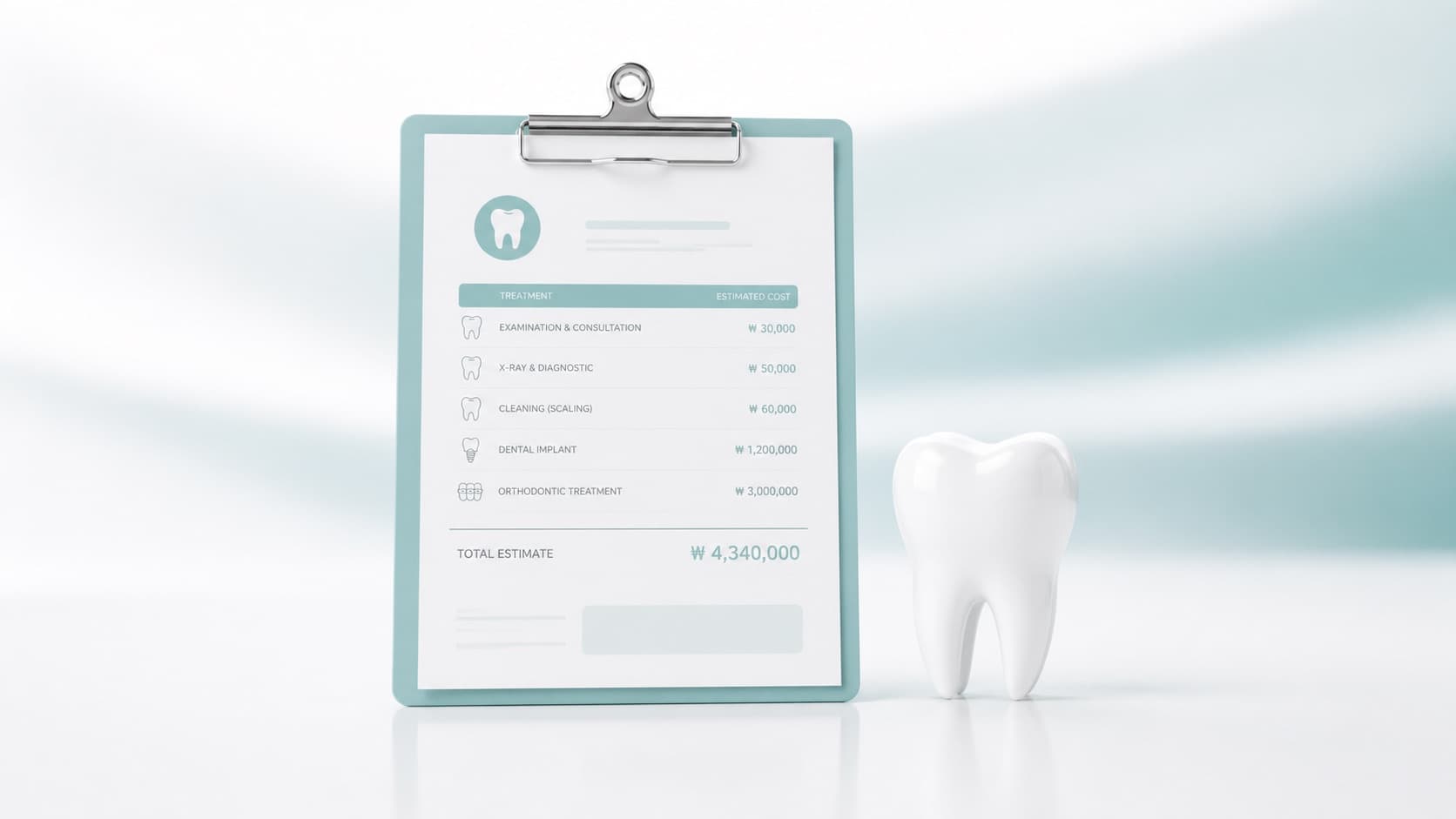
Most of paying at a Korean dental clinic is unremarkable: you tap a card at the desk on your way out. The part worth knowing in advance is the paperwork, because the slip you are handed by default is often not the one your insurer will ask for — and it is much easier to request the right document at the desk than to come back for it.
Korea runs on cards to an extent that surprises people. Dental clinics are no exception, and the transaction itself is rarely the problem. The paperwork is where a bit of foresight saves a return trip.
Cards, and whether yours will work
Domestic cards work everywhere. Foreign-issued cards usually work too, but "usually" is doing real work in that sentence — terminals vary, and the occasional one declines an overseas card for reasons nobody at the desk can diagnose.
If you are paying for something substantial, it is a reasonable thing to ask about when you book rather than discover at the desk. A clinic will tell you plainly.
The two documents, and why it matters
This is the part worth reading twice.
| Document | What it is |
|---|---|
| 영수증 — the receipt | The slip you are given automatically. It shows what you paid |
| 진료비 세부산정내역서 — the itemised statement | A separate, standard-format document showing what was done, broken down line by line |
Insurers usually want the second one, and you are usually handed the first.
The itemised statement is not a favour. Providers are required to issue it in a standard national format when a patient asks, and the first copy is free — further copies may carry a charge. Ask at the desk when you pay, not three weeks later from another country.
If you are claiming on a policy, check what your insurer actually requires before the appointment. Some want the statement alone; some want it alongside a separate certificate from the dentist, which is a different document again and may need to be requested in advance.
One bill, two kinds of treatment
A single Korean dental bill can contain both treatment covered by National Health Insurance and treatment that is not, and the two sit on the same piece of paper.
That matters for two reasons. It explains why a bill can look oddly structured — the covered portion shows the insurer's share and yours, while the uncovered portion is simply a price. And it means "is this covered?" is a question about each item rather than about the visit. What NHIS covers in dentistry goes through which treatments fall where.
Paying in instalments
For larger treatment, Korean credit cards commonly allow the amount to be split across months at the point of sale — 할부. Whether it is available, and whether it is interest-free, depends on your card issuer and on the clinic's terminal, so it is a question for the desk rather than something to assume.
It is worth asking before treatment starts if it affects your decision, since it may change how you want to sequence a plan. A clinic that gives you an itemised estimate up front makes this far easier to think about.
현금영수증 and year-end tax
If you pay cash, ask for a 현금영수증 — a cash receipt registered against your identification. Card payments are recorded automatically; cash is not, unless you ask.
This matters because medical and dental spending can count towards the year-end tax settlement for people on Korean payroll. Whether you benefit depends on your own tax situation, and the rules are the tax office's rather than the clinic's — but an unrecorded cash payment cannot be counted at all, and asking at the desk takes a moment.
What to keep
A small folder, kept as you go, saves a lot of reconstructing later.
- The itemised statement for anything you might claim on.
- The written estimate you were given before treatment, which is what lets you check that the bill matches the plan.
- Implant or prosthesis details if you have them, which matter far beyond the payment — a dentist in another country needs to know the system before they can order a matching part.
- Anything your insurer specifically named when you asked.
If you are likely to leave Korea during or after treatment, this folder becomes the handover. Leaving Korea mid-treatment covers what else to take.
Before you agree to anything
The most useful habit has nothing to do with payment methods: get the plan in writing, itemised by tooth and procedure, before treatment begins. It makes the bill checkable, it makes the scope visible, and it makes it possible to ask which parts are urgent and which can wait. How to judge whether treatment is necessary covers the questions worth asking at that point.
At Seoul Lab Dental: you get a written, itemised estimate in English before treatment starts, explained by the dentist who will carry it out — so the bill at the end matches something you already agreed to. Ask at the desk for the itemised statement if you will be claiming on insurance, and tell us what your insurer needs so we can prepare it properly.
Frequently asked questions
Can I pay by foreign credit card at a Korean dental clinic?
Usually yes — Korea runs heavily on cards and dental clinics are no exception. Terminals do vary, though, and an overseas card is occasionally declined for reasons nobody at the desk can diagnose. If the amount is substantial, ask when you book rather than finding out at the desk.
What receipt do I need for a dental insurance claim in Korea?
Usually not the one you are handed. The automatic slip is the 영수증, which shows what you paid; insurers normally want the 진료비 세부산정내역서, a separate standard-format document itemising what was actually done. Providers are required to issue it when a patient asks, with the first copy free. Some insurers also require a separate certificate from the dentist, so check what yours needs before the appointment.
Can I pay for dental treatment in instalments in Korea?
Korean credit cards commonly allow a payment to be split over months at the point of sale, known as 할부. Whether it is available and whether it is interest-free depends on your card issuer and the clinic's terminal, so ask at the desk rather than assuming. If it affects your decision, ask before treatment starts, since it may change how you want to sequence a plan.
Should I ask for a 현금영수증 if I pay cash?
Yes. A cash payment is not recorded against you unless you request a 현금영수증, while card payments are recorded automatically. Medical and dental spending can count towards the year-end tax settlement for people on Korean payroll, and an unrecorded cash payment cannot be counted at all. Whether you benefit depends on your own tax position, and those rules belong to the tax office rather than the clinic.
Want a clear estimate for your treatment?
Book a 3D scan and consultation — you'll leave knowing your treatment plan and exact cost.
Get my estimate